



3rd edition of the Mindful Lighting Meetings
Melyn Dreysse
A new step toward more sustainable and inclusive public lighting
GROUPE RAGNI, L’École de Design Nantes Atlantique and the Accessible EU Ressource Centre, annonce the 3rd edition of the Mindful Lighting Meetings, to be held on October 15, 2026, at L’École de Design Nantes Atlantique. la 3ᵉ édition des Rencontres de l’Éclairage Raisonné (RDER), qui se tiendra le 15 octobre 2026 à l’École de Design Nantes Atlantique. Following two landmark editions in 2022 (launch) and 2024 (consolidation), this new edition serves as a key component of GROUPE RAGNI’s mission, with the theme: “Public Lighting and the Inclusive City: Creating Shared Value Through Design, Standards, and Innovation,” aimed at fostering dialogue among industry stakeholders.
A pioneering approach to unite the industry
In 2022, GROUPE RAGNI introduced a bold new approach: bringing together around the same table stakeholders who, until then, had not been engaging with one another enough—local governments, manufacturers, designers, users, and community organizations. The goal? To foster collaboration, better understand each party’s expectations, and make public lighting more sustainable—ensuring it is both eco-friendly, inclusive, and innovative.
In 2024, the event built on this momentum by fostering deeper discussions on the social aspects of lighting, reaffirming their status as a must-attend event for urban planning professionals.
2026 marks a new milestone: institutionalization. With the support of L’École de Design Nantes Atlantique and Accessible EU, this edition serves as a vehicle for promoting the shared vision of GROUPE RAGNI and L’École de Design Nantes Atlantique: lighting that adapts to societal changes and supports regional transition.
“The Mindful Lighting Meetings are much more than just an event: they are a think tank where the perspectives of manufacturers, designers, and users converge. Since 2022, we have seen the emergence of unique collaborations and concrete projects, thanks to this unique platform for dialogue. In 2026, we are taking it even further by making the Mindful Lighting Meetings the vehicle for our corporate mission: to light the cities of tomorrow in a sustainable, inclusive, and innovative way .”
Stéphane Ragni, Head of GROUPE RAGNI’s Management Board & Strategic Development Director
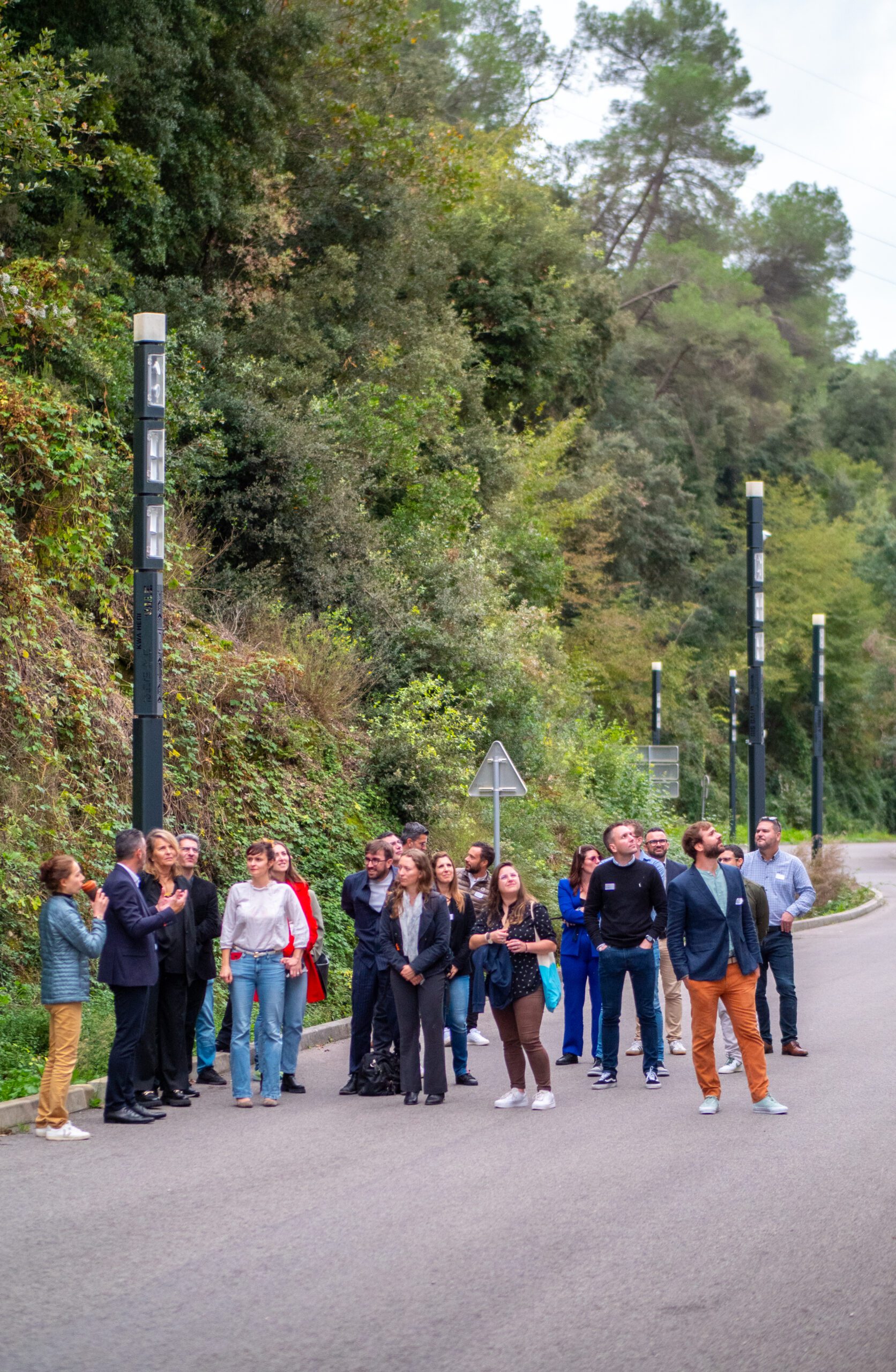
2026: Implementation and Value Creation
This year, the Mindful Lighting Meetings are stepping up their game with a program firmly focused on action and business, while staying true to their core values: dialogue, innovation, and the creation of shared value.
The theme of accessibility reflects GROUPE RAGNI’s ambition: to rethink public lighting as a driver of social inclusion, sustainability, and economic performance by drawing on the tools and methods of design for all and regulatory frameworks, all enhanced by a healthy dose of collective intelligence.
Partners committed to a shared vision
The 2026 edition is made possible thanks to strategic partnerships:
L’École de Design Nantes Atlantique: A pioneer in integrating technological, societal, and environmental issues, she brings her expertise in strategic design and Design for All methodologies.
Accessible EU: As the European Accessibility Resource Center, it works to ensure that everyone can participate in public spaces, in line with the European Commission’s Strategy on the Rights of Persons with Disabilities (2021–2030).

2026 events – Where can you find GROUPE RAGNI?
Melyn Dreysse

June 8 – 11, 2026
Chile

June 16 – 17, 2026
Paris, France

September 22 – 23, 2026
Paris, France

October 15, 2026
Nantes, France

November 12 – 13, 2026
Warsaw, Poland
November 19 – 21, 2026
Hamburg, Germany
November 24 – 26, 2026
Paris, France
4 erreurs à éviter pour réussir vos projets d’éclairage public
Melyn Dreysse
Pour les collectivités, l’éclairage public est clairement devenu un levier stratégique : il renforce la sécurité, sublime le cadre de vie et améliore l’attractivité des territoires. Mais son impact ne s’arrête pas là. Il influence aussi la biodiversité, la qualité du ciel étoilé et, bien sûr, les budgets communaux, notamment à travers la consommation énergétique. Un sujet à ne surtout pas sous-estimer.
Avec le GROUPE RAGNI, découvrez les 4 erreurs à éviter pour réussir vos projets d’éclairage public, qu’il s’agisse de créations neuves ou de rénovations. Parce qu’un éclairage bien pensé, c’est un territoire qui gagne en efficacité, en durabilité et en harmonie.
1 – Penser que l’éclairage doit être le même partout
À chaque projet son éclairage. En effet, la lumière peut être adaptée de bien des manières. Il est essentiel de prendre le temps de comprendre l’usage du lieu, sa localisation, sa temporalité et l’environnement du site afin de dimensionner au mieux la solution en fonction de ce qui le caractérise.
Éclairer où il faut
Il est important de n’éclairer que les lieux d’usage, sans générer de lumière inutile.
- Des études d’éclairement vous permettront d’évaluer le flux lumineux utile et donc d’éviter d’éclairer des zones qui doivent rester dans l’obscurité
- Des luminaires dynamiques permettront également d’ajuster la photométrie au type d’usage.
Éclairer quand il faut
S’il n’y a pas d’usager, il n’est pas utile de mettre le lieu en lumière.
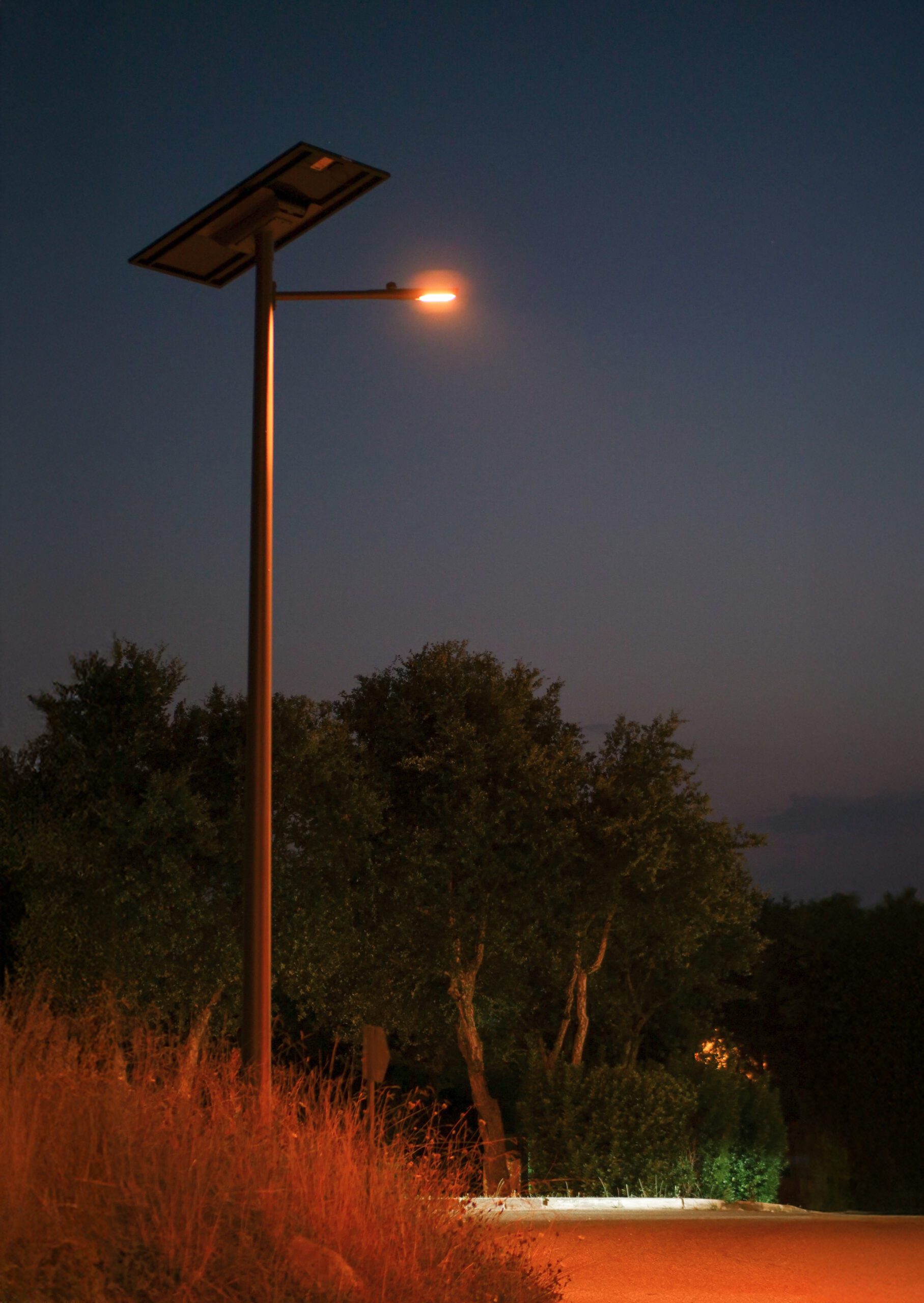
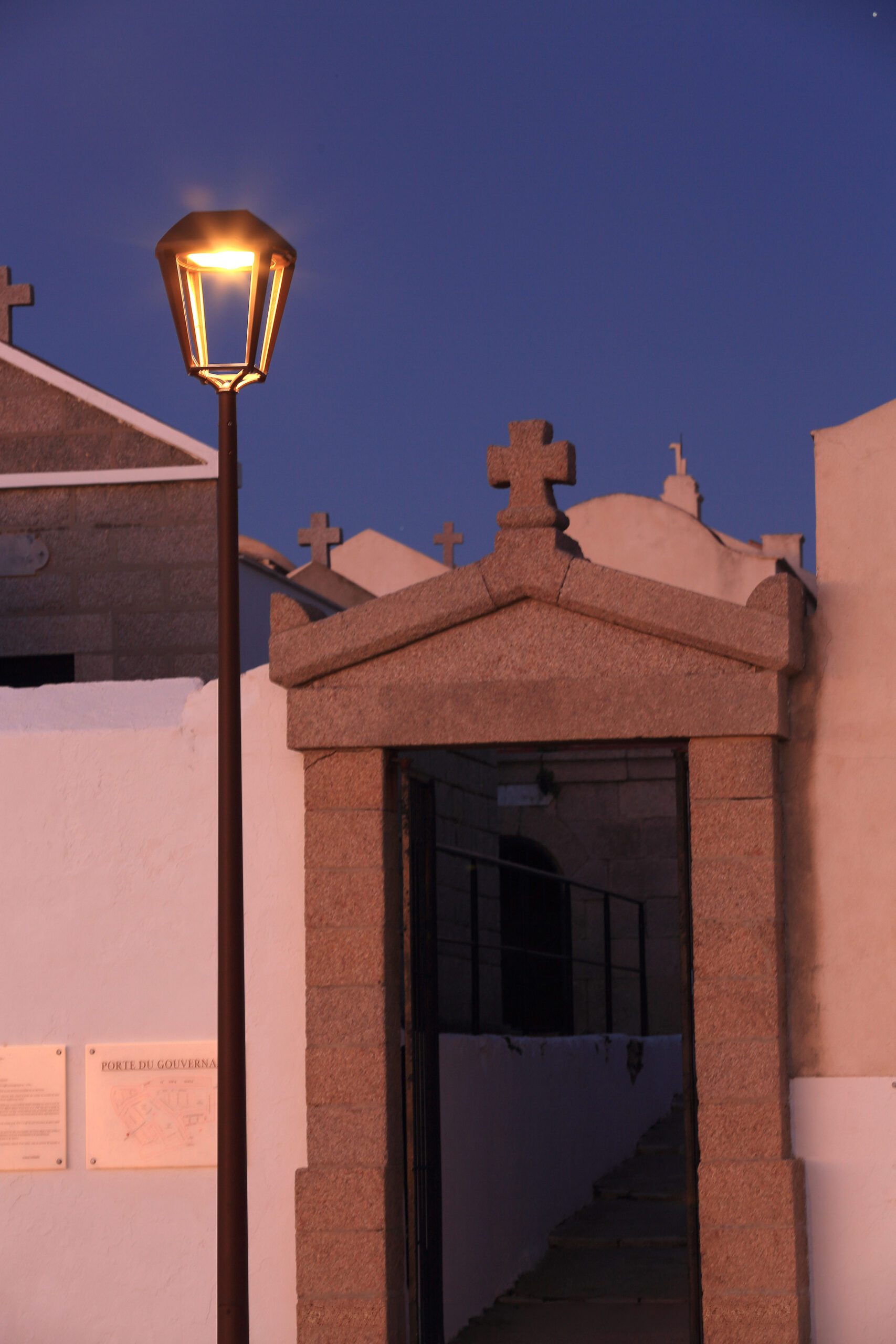
- Des solutions de gradation nocturne, pouvant aller jusqu’à l’extinction à des horaires spécifiques, peuvent être mises en place.
- Des capteurs de présence communicants, générant un train de lumière à des horaires spécifiques, peuvent également être installés.
Ces deux éléments vous permettront d’améliorer les performances de la solution.
Sur un éclairage raccordé au réseau, vous obtiendrez la plus faible consommation d’énergie possible. Sur un éclairage solaire autonome, vous disposerez de la solution la plus ajustée au besoin, et donc de la plus économique.
Il est évidemment essentiel d’uniformiser l’approche globale afin de préserver l’harmonisation du patrimoine, ce qui mène au point suivant.
2 – Voir un lampadaire comme un simple… lampadaire
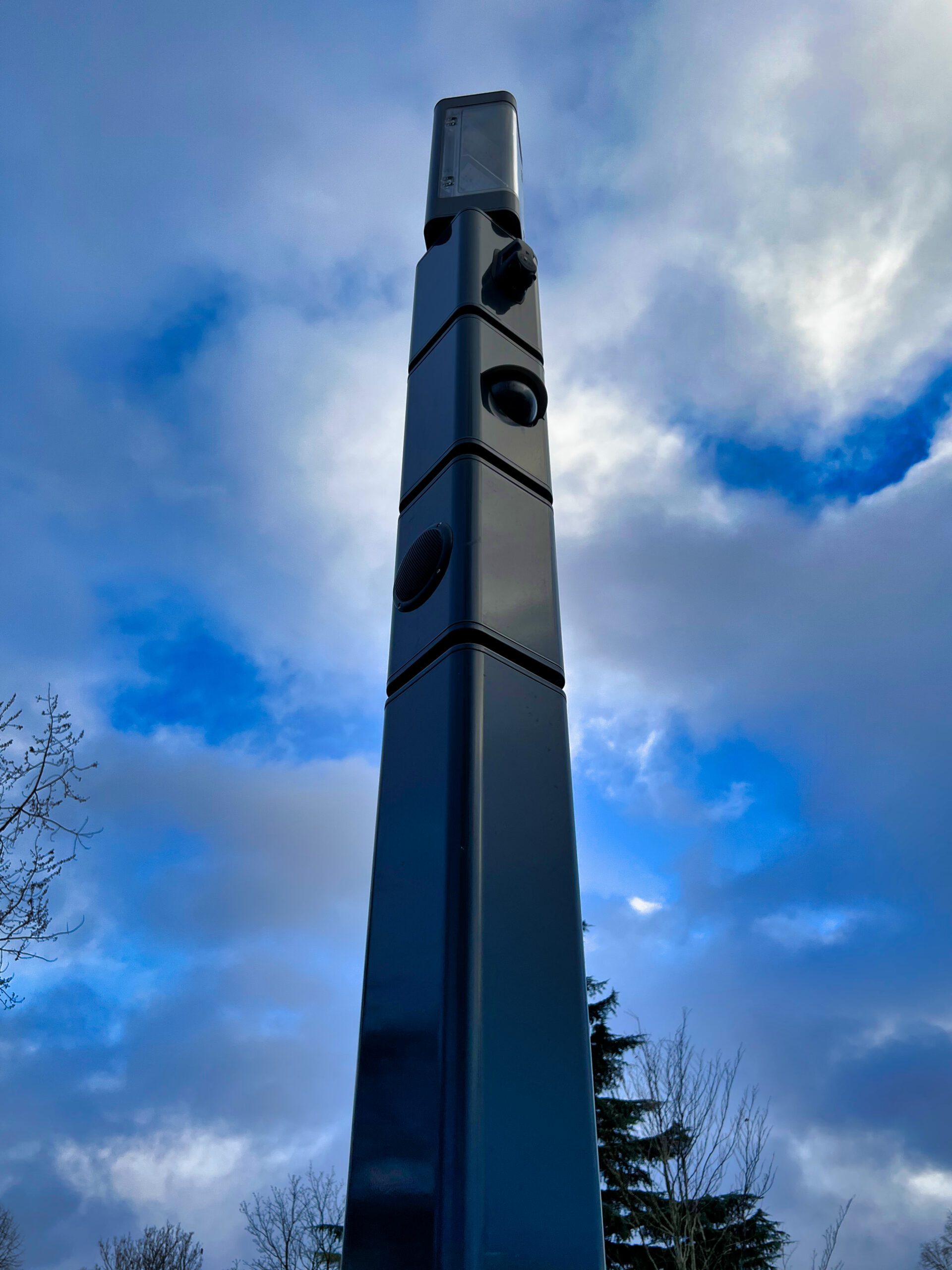
De nos jours, un réverbère n’est plus un simple éclairage : il devient un véritable support multi-usages, et de nombreuses options existent.
D’abord, personnalisez-le pour l’intégrer à l’architecture locale, avec :
- un design global identitaire,
- une peinture spécifique,
- une découpe sur mesure.
Envisagez de l’équiper d’accessoires pratiques pour la collectivité :
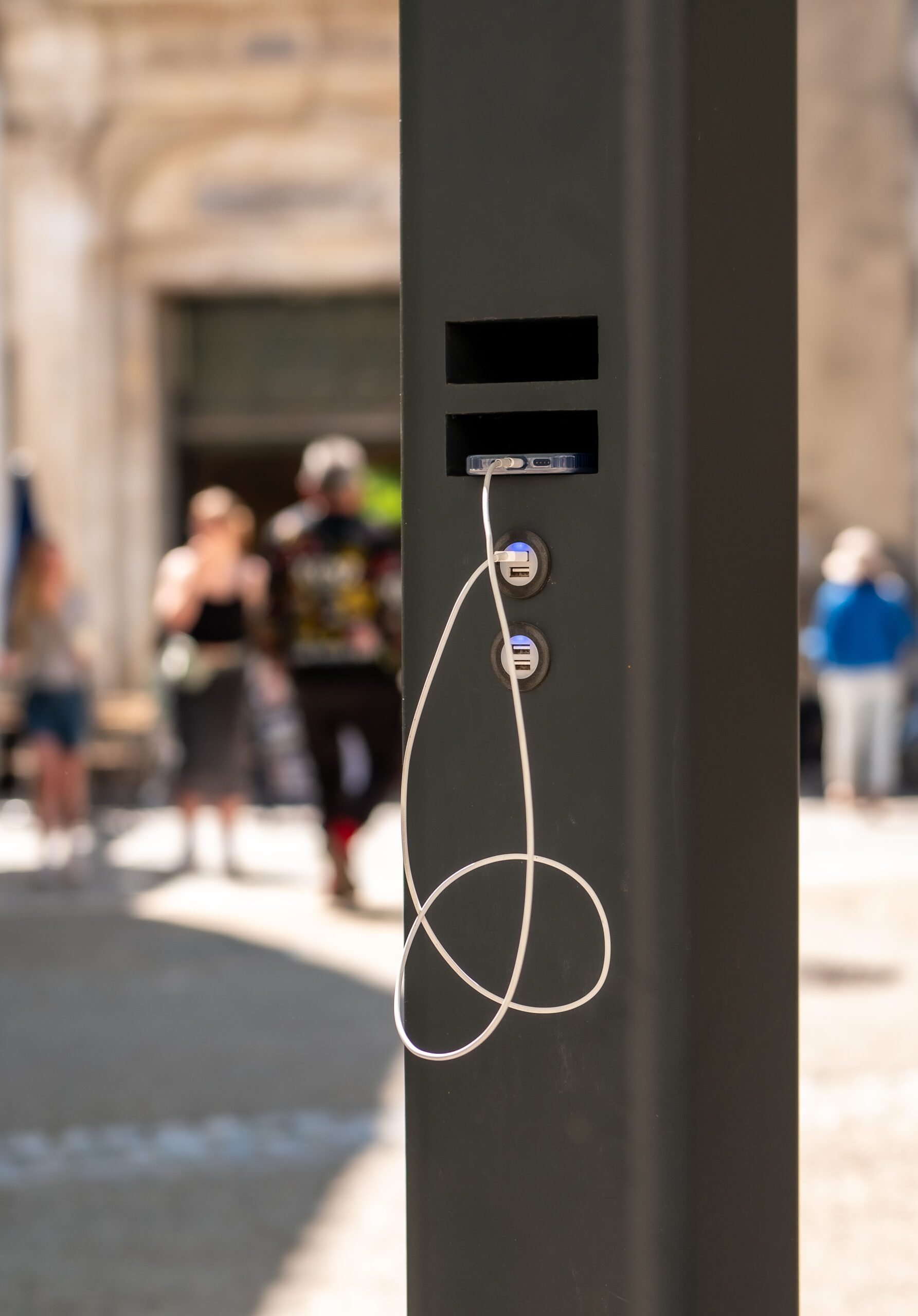
Recharge : Module USB pour la recharge de smartphones – Recharge de mobilités douces
Sécurité : Caméras de vidéo-protection
Communication : Haut-parleurs et/ou Gobo – Kakémonos pour la communication citoyenne
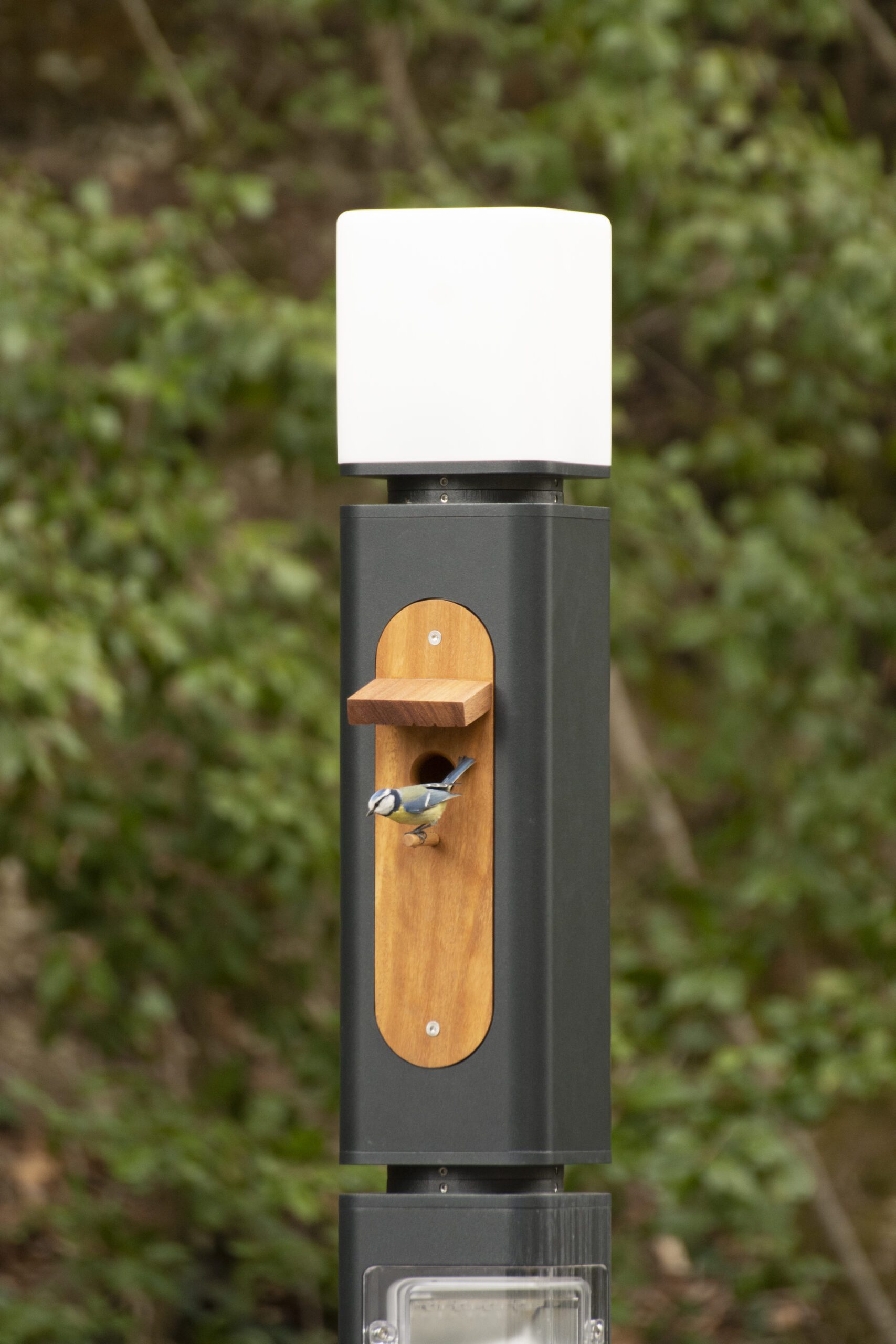
Pour le vivant : Nichoir pour petits oiseaux type mésanges
3 – Ignorer l’écosystème et son environnement
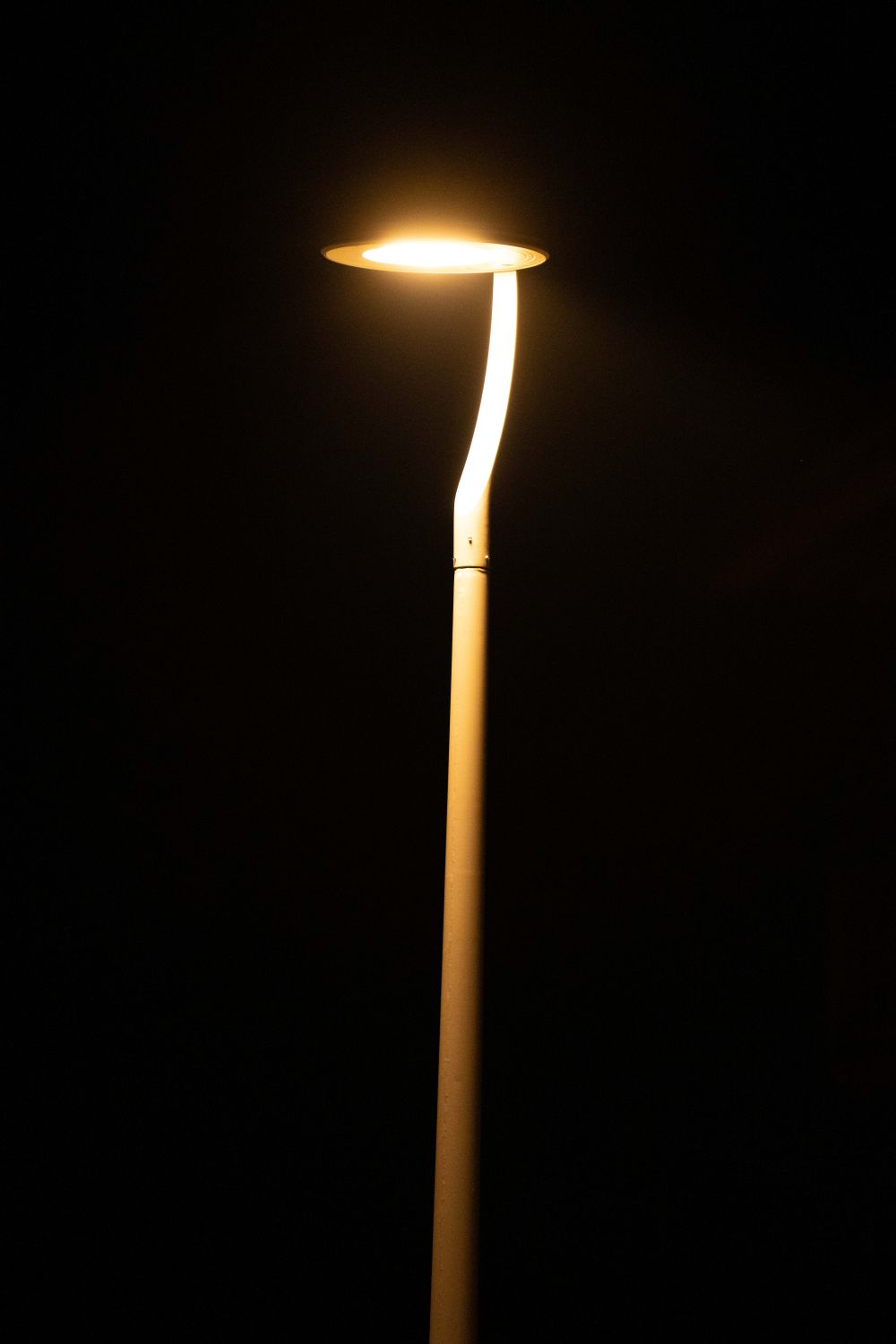
Chaque territoire possède ses propres écosystèmes naturels. Il est indispensable de prévoir un éclairage sobre et raisonné pour réduire l’impact de la lumière sur le vivant, au sens large.
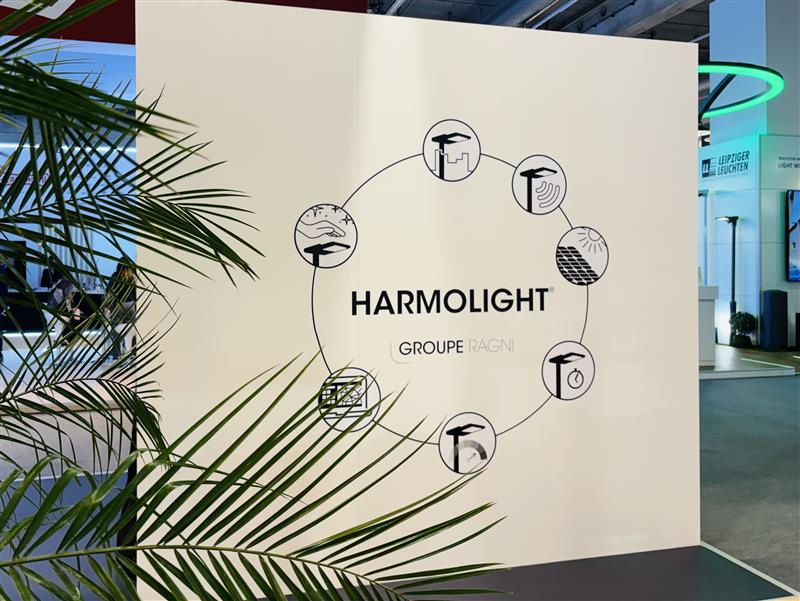
Le GROUPE RAGNI a créé HARMOLIGHT® pour éclairer en harmonie avec le vivant.
Avec HARMOLIGHT® :
- Adaptez la température de couleur à chaque espace afin d’être le plus respectueux possible de la faune et de la flore ;
- Ajustez les optiques pour conserver des zones d’obscurité et limiter l’impact sur la biodiversité tout en préservant le ciel étoilé ;
- Éclairez uniquement lorsque cela est utile, avec une temporalité adaptée aux différents usagers de la nuit ;
- Grâce aux solutions solaires autonomes évitez de générer du génie civil, du bruit et des émissions de CO₂.
Le GROUPE RAGNI s’engage à vos côtés avec une production 100% française et locale — un atout clé pour renforcer votre politique d’achats responsables tout en réduisant l’empreinte carbone liée aux transports. Moins de kilomètres, plus de transparence et un impact positif pour vos objectifs RSE.
4 – Ne pas anticiper
Un projet d’éclairage public, c’est un investissement sur plus de 20 ans : sa réussite dépend aussi de sa maintenabilité et de son évolutivité — deux piliers essentiels pour sécuriser vos aménagements et garantir un service optimal aux citoyens.
La maintenabilité des équipements
Opter pour des équipements de qualité, c’est bien. Pouvoir les entretenir facilement, c’est mieux. Une maintenance simplifiée assure la longévité de vos installations et limite les coûts cachés, tout en préservant la qualité de service pour les usagers.
L’évolutivité
Les villes évoluent, les technologies aussi. Votre éclairage public doit suivre ces évolutions.
Garantir l’évolutivité de vos luminaires c’est :
- Des performances optimisées grâce à des mises à jour technologiques.
- De nouvelles fonctionnalités intégrées sans tout remplacer.
- Une interopérabilité renforcée, notamment via la télégestion, pour connecter vos luminaires à d’autres services urbains.
L’éclairage public utilise majoritairement les standards Zhaga Book 13, 15 et 18 qui permettent aux collectivités de maintenir leurs solutions avec des éléments standards, plus disponibles que des solutions propriétaires. Standardisés, ces équipements vous permettent de profiter d’équipements de nouvelles générations
et ainsi de bénéficier de nouvelles fonctionnalités.
Résultat : plus de flexibilité, des mises à jour simplifiées et des ressources préservées.
En conclusion
En évitant ces 4 erreurs, votre projet d’éclairage public intègre les attentes de toutes les parties prenantes
(collectivités, usagers et de la biodiversité) pour un résultat durable, inclusif et responsable. De l’analyse de vos besoins à la mise en service, nous vous accompagnons pour un éclairage performant, évolutif et aligné avec les enjeux de durabilité.

GROUPE RAGNI, PARTNER OF AFRICA FORWARD IN NAIROBI
Melyn Dreysse
2026 Africa-France Summit in Nairobi: GROUPE RAGNI, an African economic player supporting lighting projects of all sizes across the continent
On May 11, 2026, the GROUPE RAGNI will be in Nairobi (Kenya) for the Africa Forward Summit, organized under the auspices of the Office of the President of the French Republic. The event will bring together President Emmanuel Macron, the entire Team France Export (BPIfrance, Business France, the Directorate General of the Treasury, Foreign Trade Advisors, etc.), as well as numerous African heads of state and government. Our participation in this high-level summit reflects the progress the Group has made on the African continent in recent years and the growing recognition of its position within the French export ecosystem.
From an industrial player to a leading player in major public infrastructure projects
Over the past four years, GROUPE RAGNI has developed a comprehensive service offering designed to address the full complexity of African public procurement markets: design, manufacturing, installation, operation, and maint It is this integrated EPC approach, backed by structured export financing packages and innovative business models such as public-private partnerships, that the Group is committed to building. The project in Senegal, involving the supply, installation and maintenance of 36,000 stand-alone solar streetlights throughout the country, is the central operational reference point for this strategy, and has demonstrated its full feasibility on a large scale.
An African strategy backed by a recognized institutional base
This positioning is based on solid, long-term institutional partnerships. BPIfrance has been a shareholder of GROUPE RAGNI since 2022, demonstrating its confidence in the Group’s export strategy. In addition, the French Treasury has awarded the Group two FASEP grants, for Uganda (2023) and Benin (2024). These measures attest to the French government’s recognition of the quality and relevance of our projects on the continent. Enfin, en Côte d’Ivoire, le GROUPE RAGNI s’apprête à signer un partenariat formel avec le Ministère des Mines, du Pétrole et de l’Énergie, portant sur la structuration d’un programme national d’éclairage public intégré. The agreement will be formalized in Nairobi, in the presence of the French government.
A statement at the highest political level
As a sponsor of the Africa Forward Summit, the GROUPE RAGNI will actively participate in the roundtable discussion titled “Productive Cities: Balancing Urban Growth and Industrial Performance,” organized as part of the Agora Build, in the presence of several African heads of state and government. This forum will allow us to convey, at the highest level, our conviction that smart, solar-powered, and connected public lighting is a key driver for the African cities of tomorrow—cities that are productive, sustainable, and resilient.
GROUPE RAGNI, a key member of Team France Export
GROUPE RAGNI is participating in this summit as a committed member of Team France Export, alongside BPIfrance, the Directorate General of the Treasury, and all stakeholders in French economic diplomacy, gathered under the leadership of the President of the Republic. It is within this ecosystem of excellence that the Group, project by project, has built the credibility that now enables it to engage directly in negotiations with government ministries, sovereign agencies, and international donors. The Nairobi Summit marks a new milestone in this process. The Group will be there!
A New Direction for Public Lighting in Africa
Melyn Dreysse
In Gabon, a country with a population of approximately 2.3 million, the public lighting network comprises nearly 28,500 connected light points, including approximately 25,000 high-pressure sodium lamps, as well as approximately 15,000 solar streetlights, 12,000 of which were supplied by NOVEA ÉNERGIES, positioning the GROUPE RAGNI as a leading player and partner in off-grid lighting in the country. The first solar installations, completed as early as 2017, are still in operation without requiring any maintenance, a testament to their durability.
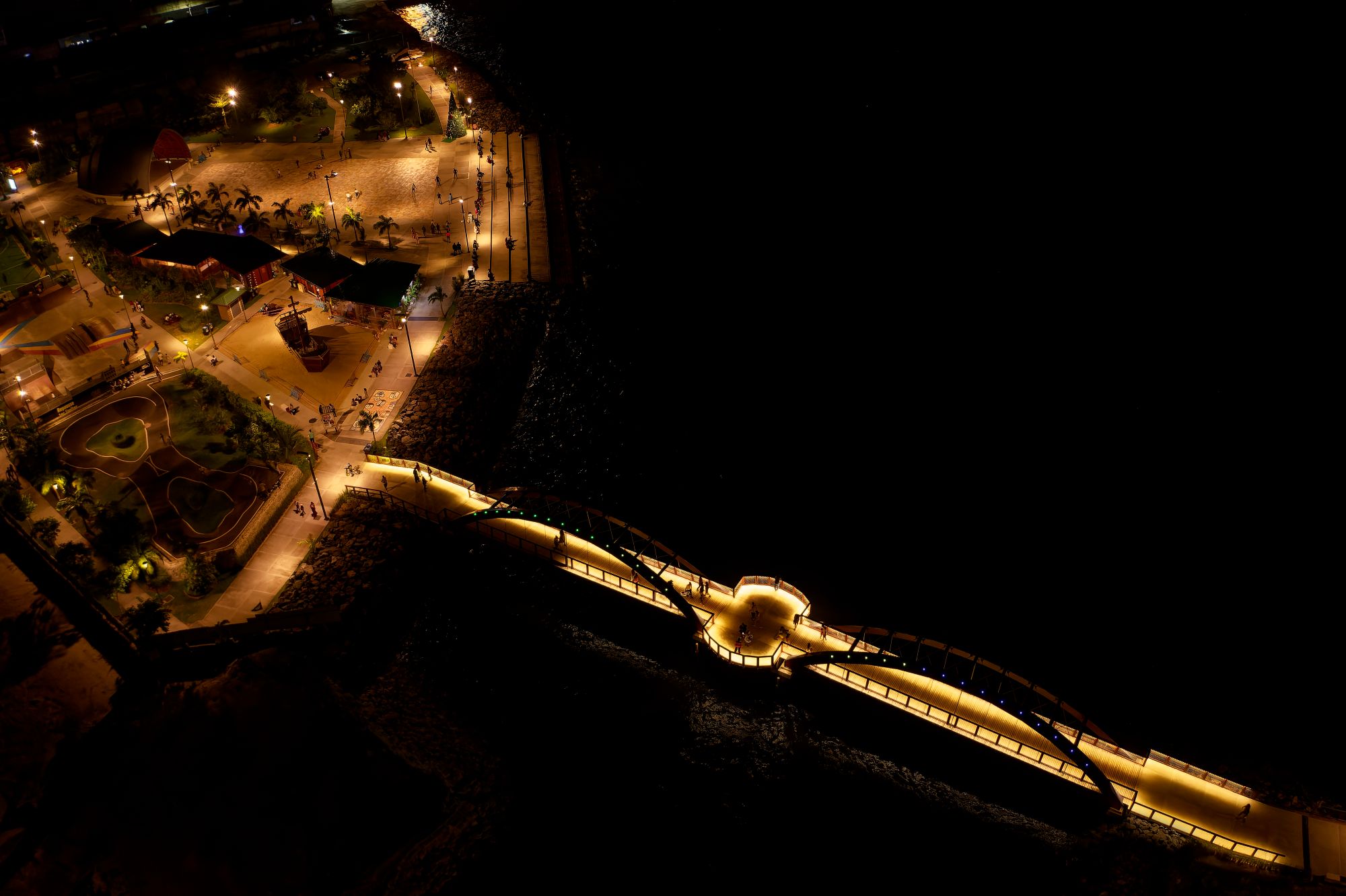
The FMCT (Façade Maritime du Champ Triomphal) has chosen to continue modernizing its public lighting on the “Baie des Rois” site, an urban project launched in Libreville in 2021. This initiative aims to harmonize the development of the waterfront and create a contemporary space dedicated to tourism, economic activities, and recreation.
Faced with these challenges, the Group has deployed a multi-brand approach, adapted to the different urban uses of the “Baie des Rois” site:
RAGNI
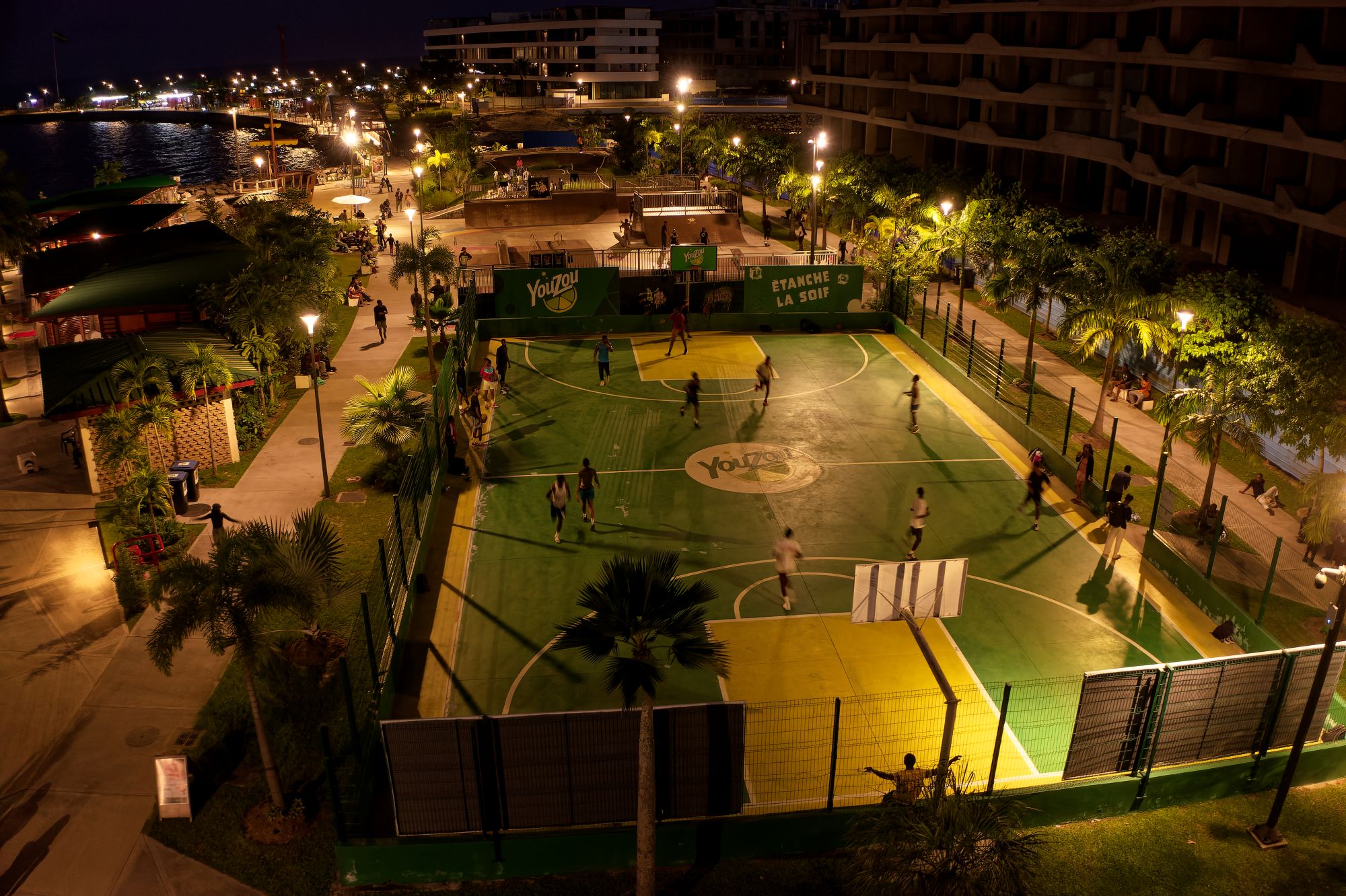
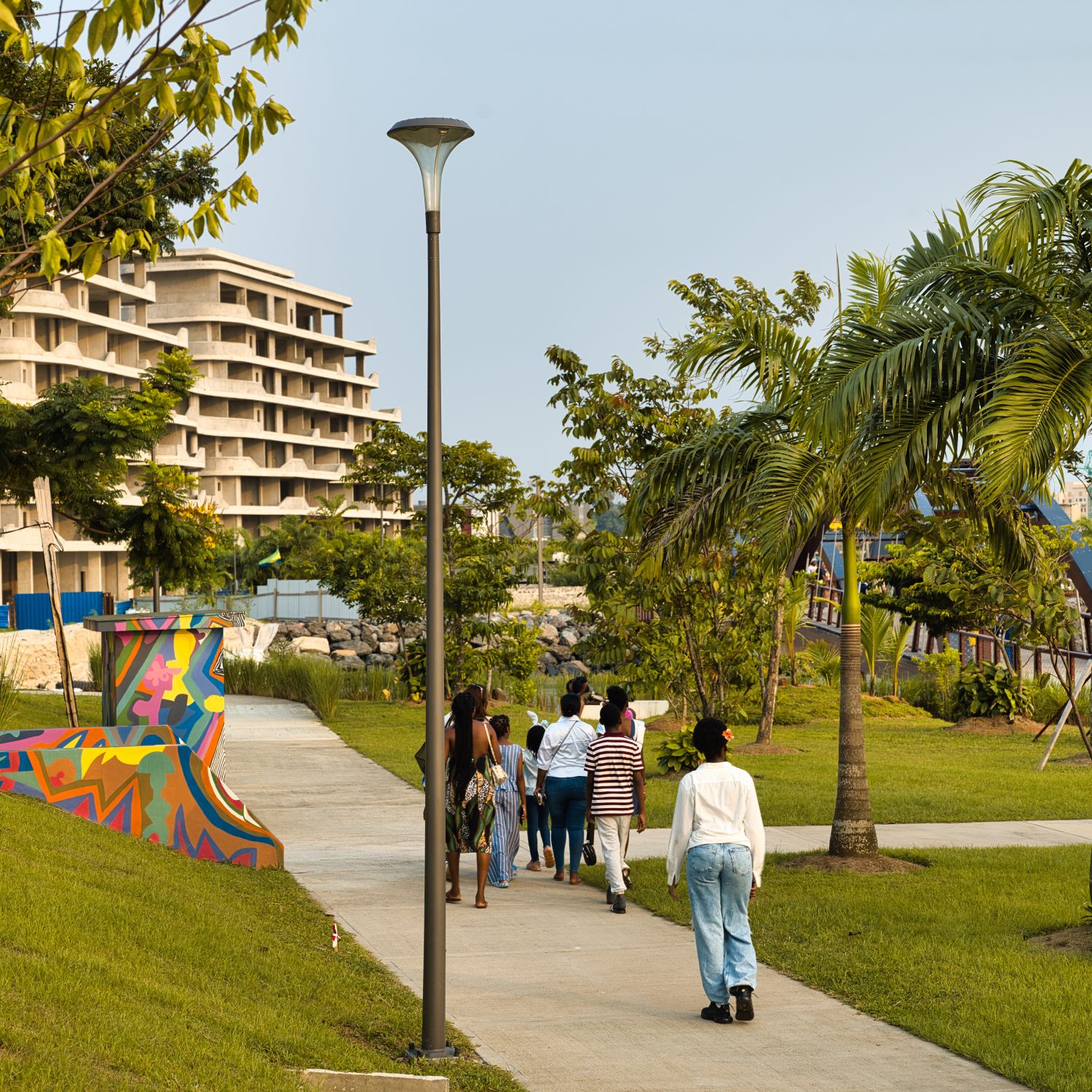
- 52 CHIC luminaires installed in pedestrian areas and playgrounds, in 3000 K amber, to harmonize the site and reduce environmental impact.
- 4 ALTURAN luminaires around buildings for an architectural design touch.
Particular attention was paid to biodiversity, so as not to disturb turtle nesting areas, which are very common in Gabon. At the Baie des Rois site, where there is no beach, the public lighting was designed to keep them away from areas unsuitable for nesting.
NOVEA ÉNERGIES
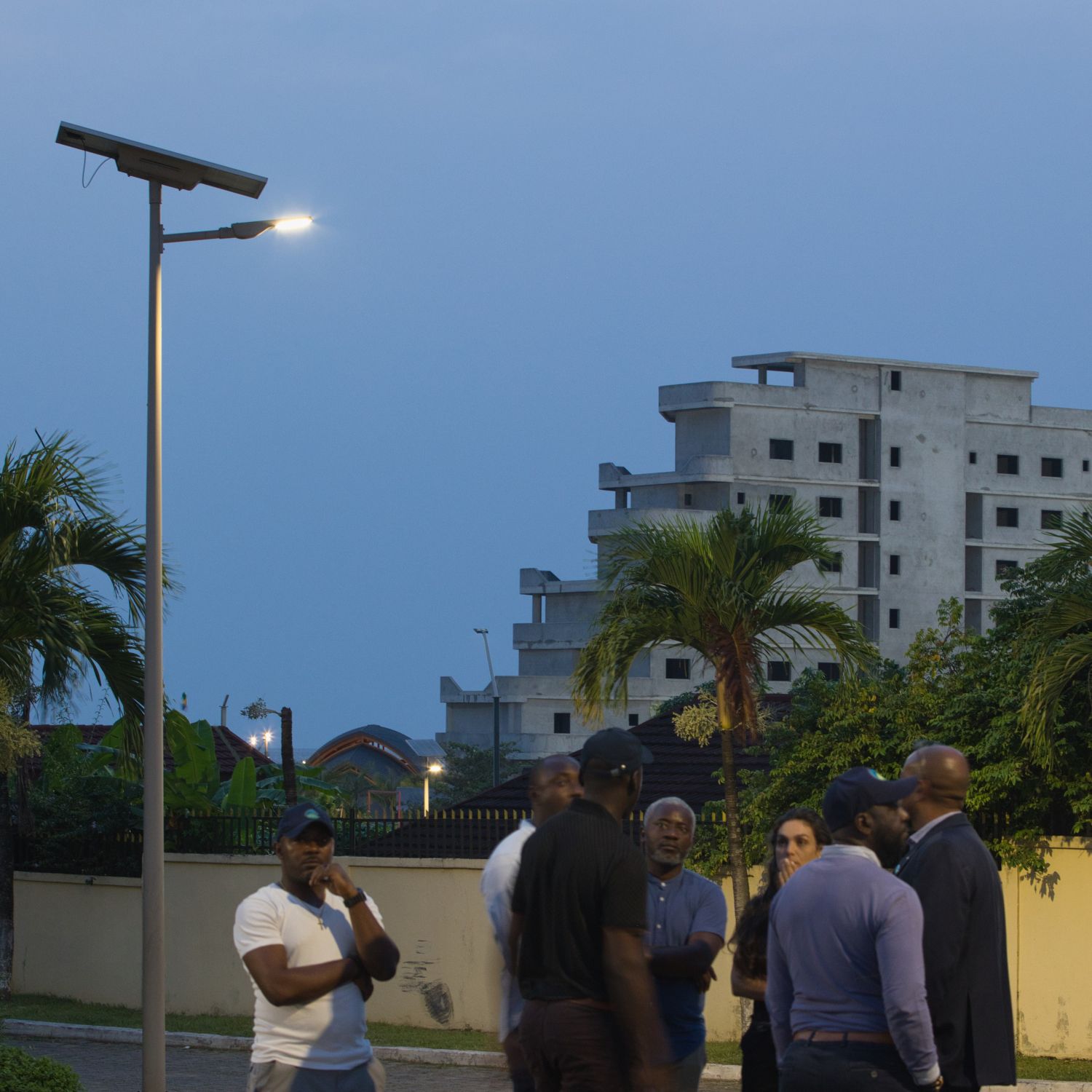
- 10 COMBI TOP 3 solar solutions, scheduled for installation in early June 2026. It includes power reduction (100% then 50%) to limit environmental impact.
This equipment is in addition to the 10,000 solar-powered light points previously installed throughout the country, to provide permanent lighting despite power cuts.
LEC
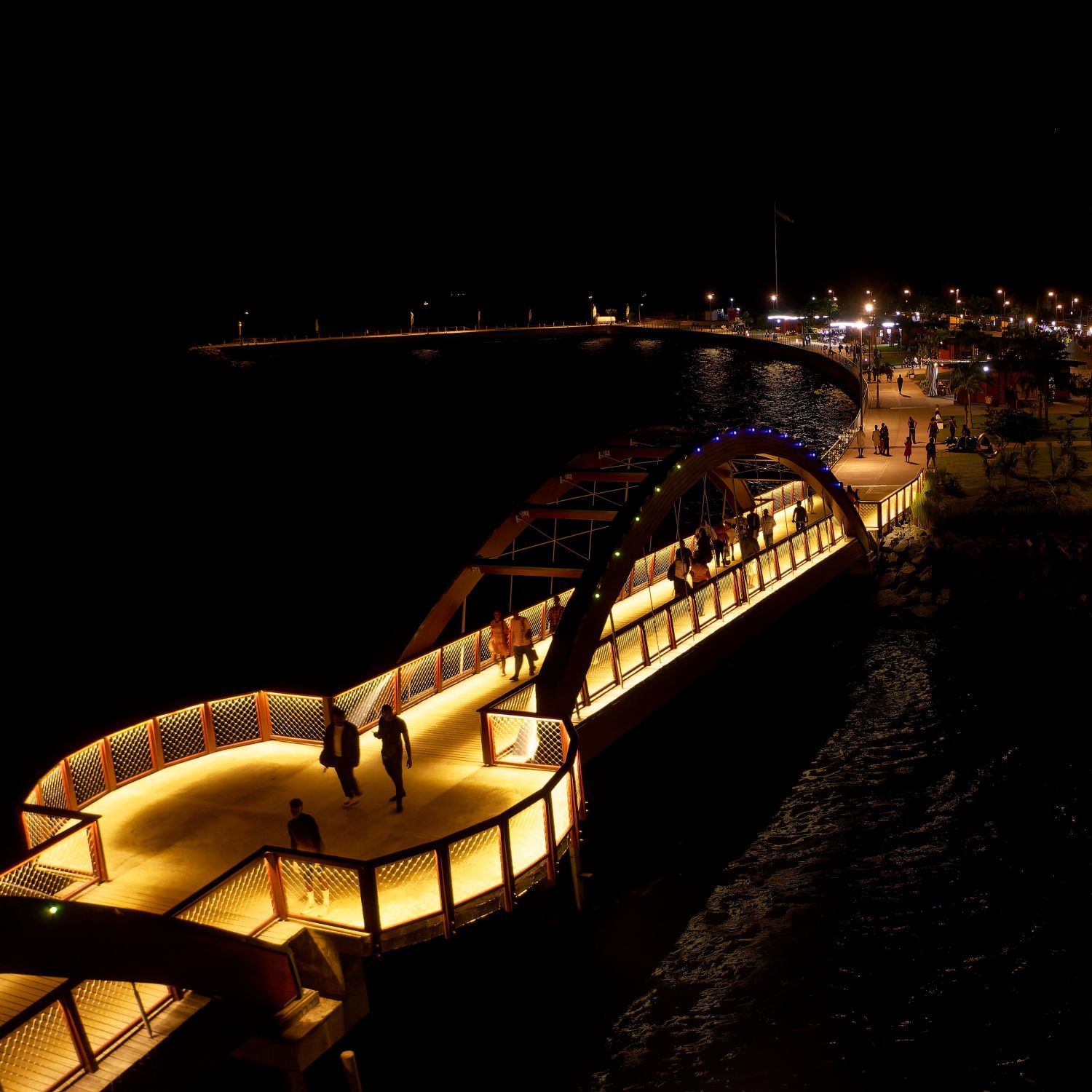
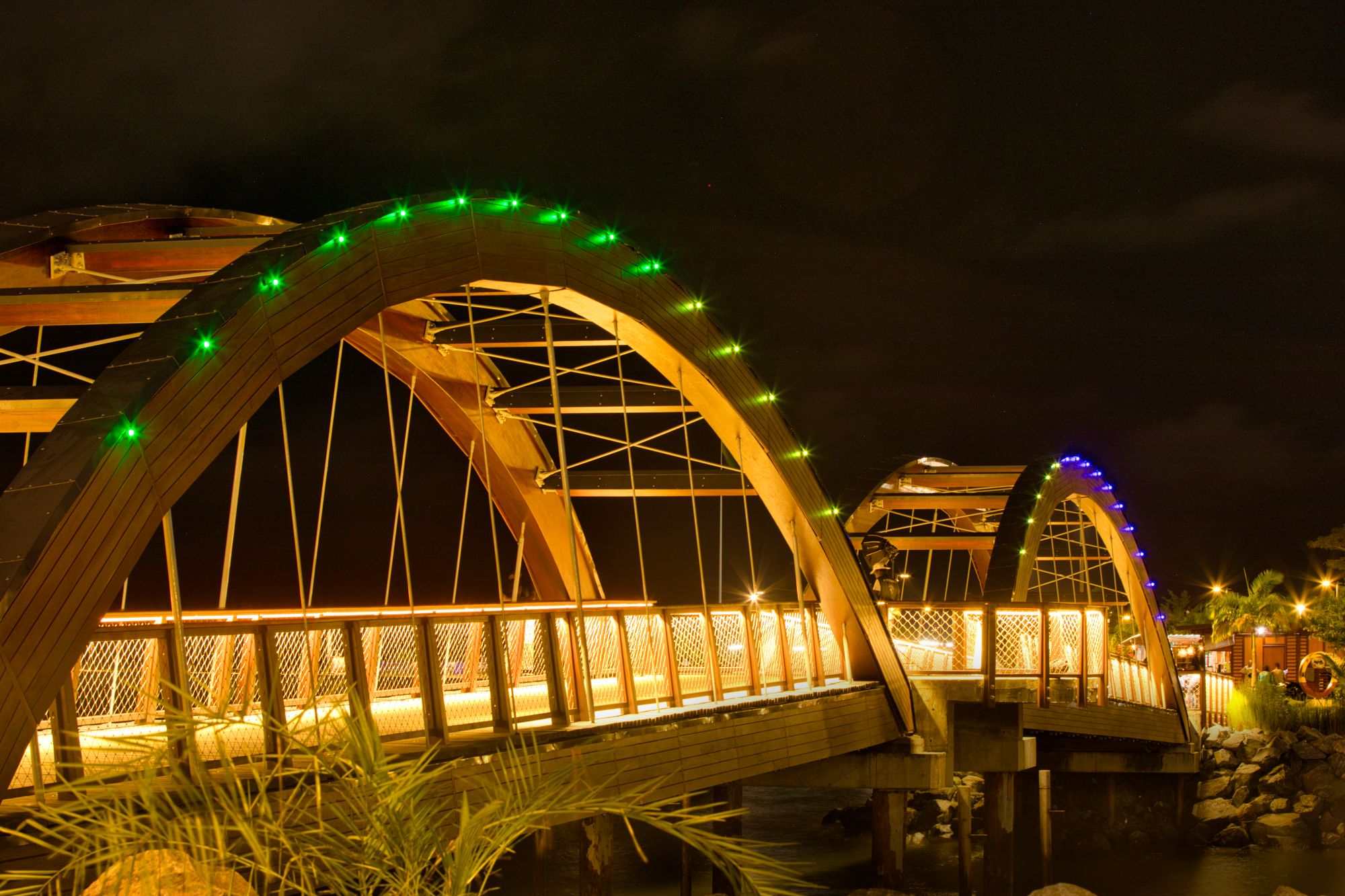
- 30 custom-made floodlights developed for this project on Africa’s longest wooden boardwalk over the sea (70 m), 30 of which have already been installed, with 4 more to be installed to improve uniformity.
- 25 LUMINY 4 and 13 LIMA, scheduled for delivery in June 2026.
The whole project enhances the architectural value of the footbridge and the arch of the Baie des Rois pedestrian bridge, an emblematic site in the city.
ECO-INNOV
- 4 ECO-CITY 35 on a crosswalk in the test phase, with commissioning scheduled for June 2026.
This light marking system could be extended to the entire bay.
This project reflects a realistic approach, focused on adapting solutions to local specificities and budget constraints. GROUPE RAGNI’s strength lies in the complementary nature of its solutions, combining the quality of its equipment with on-the-ground support that is essential to the success and sustainability of projects.
This partnership paves the way for future large-scale projects in the service of Gabon.
We would like to thank SNEF GABON, FMCT (Façade Maritime du Champ Triomphal) and URBAGEC Maroc for their involvement and trust, as well as our sales representatives, Justine AUGIER, Project Manager in Gabon and Yassine EL HICHOUNI, Africa Area Manager at GROUPE RAGNI.

Le GROUPE RAGNI, partenaire du Congrès de RICE de France
Melyn Dreysse
Les RICE : des sanctuaires pour la biodiversité et le ciel étoilé
Les Réserves Internationales de Ciel Étoilé (RICE) sont des territoires engagés dans la protection de la qualité du ciel nocturne, reconnus pour leur faible pollution lumineuse et leur engagement en faveur de la biodiversité. Ces réserves sont labellisées par Dark Sky International, basée aux Etats-Unis. Leur rôle est de valoriser le patrimoine astronomique et culturel lié à la nuit et de préserver les écosystèmes nocturnes (faune, flore, paysages) et en promouvant notamment un éclairage responsable, sobre et adapté aux enjeux locaux.
La RICE « Alpes Azur Mercantour », labellisée depuis 2019, est un laboratoire vivant, situé sur notre territoire maralpin, avec lequel nous entretenons un dialogue constructif depuis 2022, date de la première édition des Rencontres de l’éclairage raisonné.
Le congrès RICE de France : un rendez-vous clé pour l’éclairage durable
Du 16 au 18 juin 2026, la Maison départementale de l’environnement et de l’observation de Valberg accueillera le congrès national des RICE, réunissant le Congrès des RICE de France et étrangères autour des enjeux nocturnes ainsi que d’autres territoires luttant contre la pollution lumineuse dans le monde. L’événement rassemblera élus, gestionnaires d’espaces naturels, scientifiques, industriels et associations autour de conférences, ateliers et tables rondes sur des thématiques variées : techniques d’éclairage, évolution de la pollution lumineuse, outils pédagogiques, impacts spécifiques de la lumière artificielle sur la biodiversité, etc.
Le GROUPE RAGNI soutient le Congrès des RICE
Implanté dans la région, le GROUPE RAGNI partage avec la RICE Alpes Azur Mercantour une ambition forte : protéger la nuit tout en répondant aux besoins des territoires. Notre engagement s’inscrit dans une logique de proximité et de co-construction avec les acteurs locaux (collectivités, parcs naturels, offices de tourisme). Nous connaissons les défis spécifiques des zones rurales et protégées, et y développons des solutions adaptées :
- Éclairage dynamique et intelligent pour limiter les flux lumineux inutiles.
- Matériaux et designs respectueux des paysages nocturnes.
- Accompagnement des collectivités dans la mise en conformité avec les réglementations (ex : arrêté du 27 décembre 2018 sur les nuisances lumineuses).
Nous valorisons la sobriété énergétique et lumineuse, le respect des écosystèmes et l’innovation à travers les partenariats et les projets collaboratifs.
En soutenant les RICE, le GROUPE RAGNI réaffirme son rôle d’acteur engagé auprès des institutions. Nous croyons que la transition vers un éclairage durable passe par :
- Le dialogue avec les décideurs : échanger avec les élus, les parcs naturels et les agences régionales pour aligner les solutions techniques sur les politiques publiques
- La formation et la sensibilisation : partager nos retours d’expérience avec les techniciens territoriaux, les bureaux d’études et les offices de tourisme, via des événements et rencontres
- La promotion de bonnes pratiques : valoriser les initiatives locales et les intégrer dans notre démarche RSE
Vers une synergie entre préservation et innovation
Le Congrès des RICE est une opportunité unique de créer des synergies entre acteurs publics, industriels et associatifs. For GROUPE RAGNI, this event serves as a think tank to accelerate the adoption of mindful lighting across regions, and as a means to strengthen the link between technical innovation and societal expectations, particularly with regard to the preservation of nightscapes. Enfin, c’est une vitrine pour positionner la région Sud comme modèle en matière de transition lumineuse, associant performance économique et respect de l’environnement.
Light+Building - 2026
Melyn Dreysse
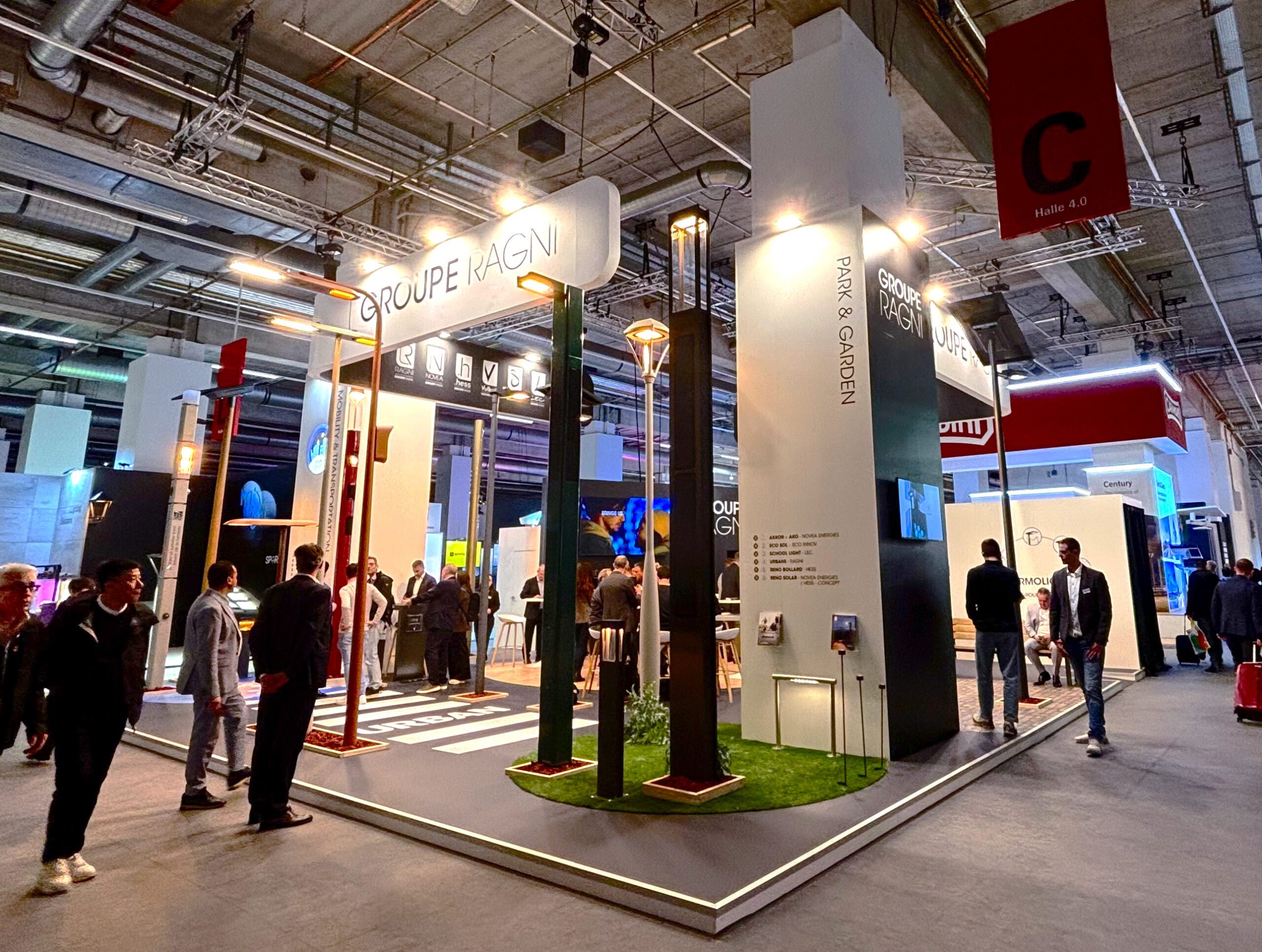
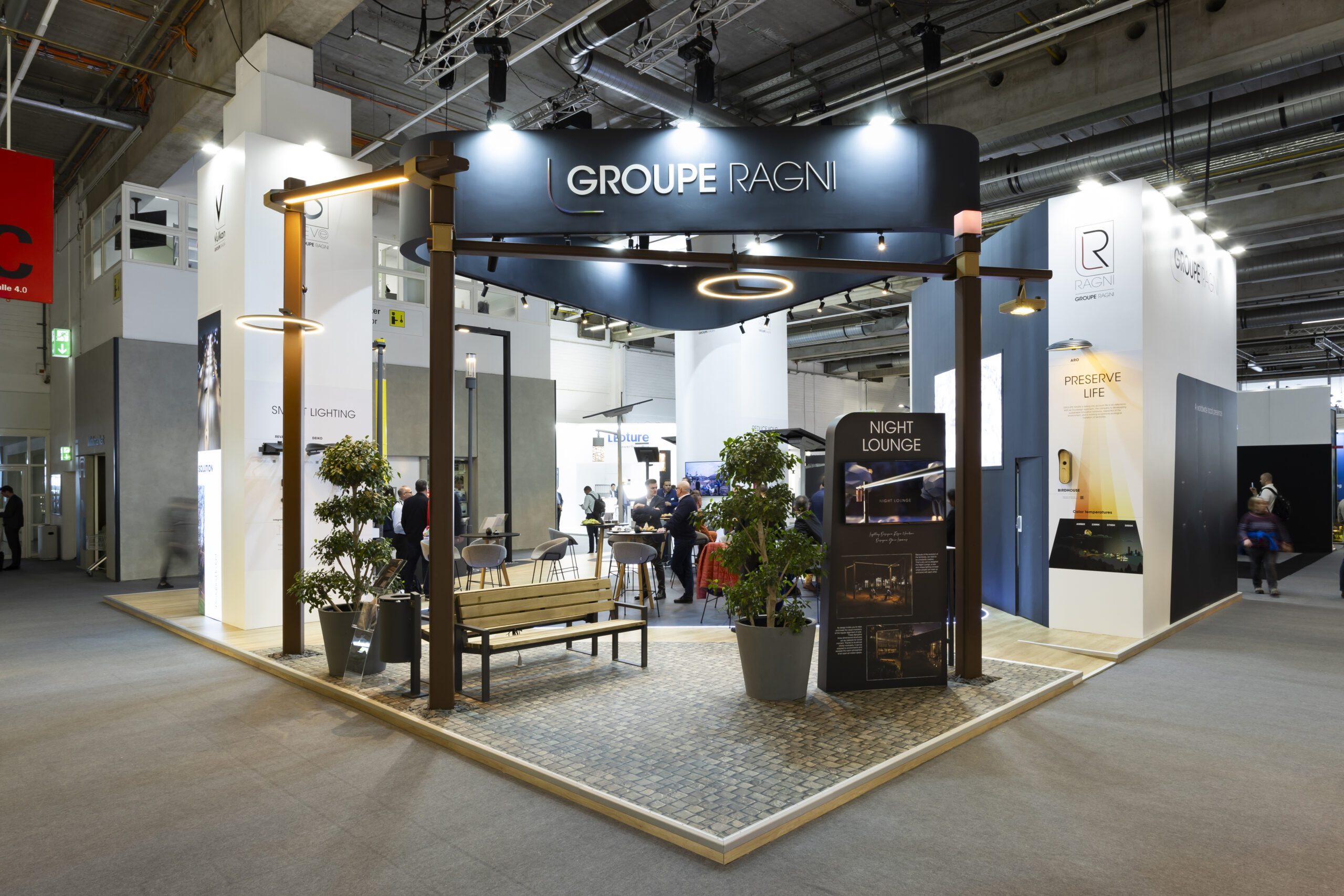
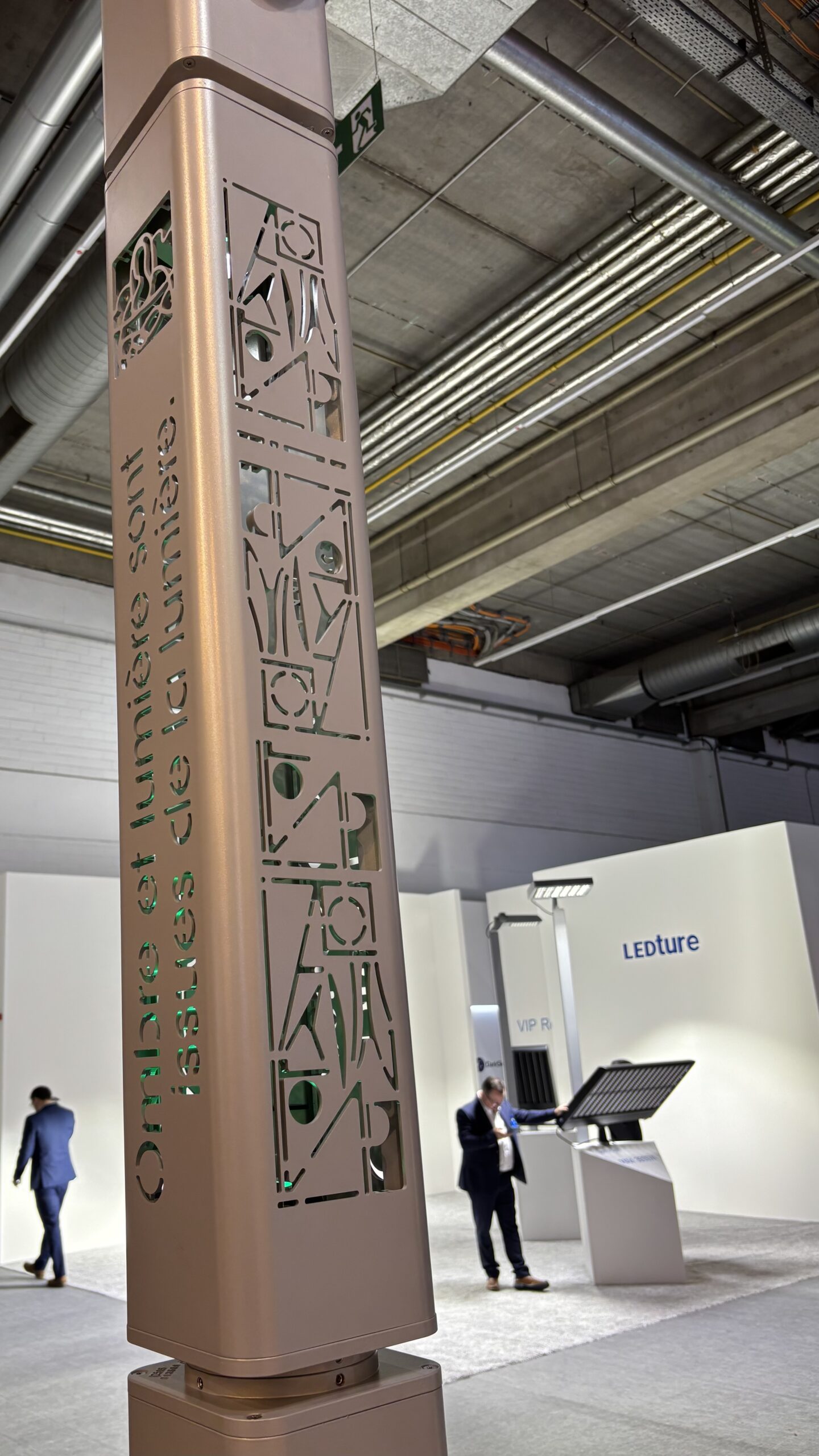
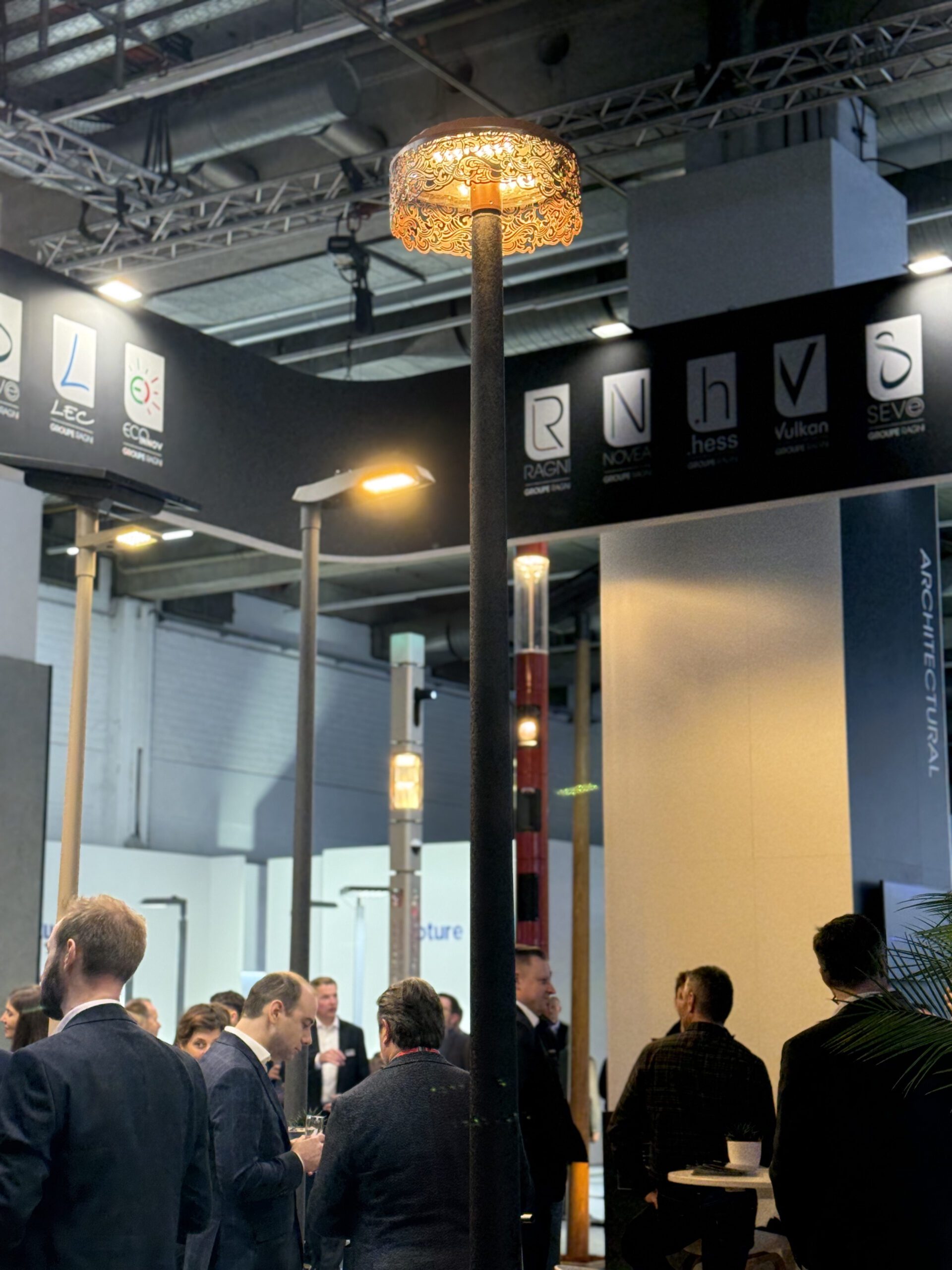
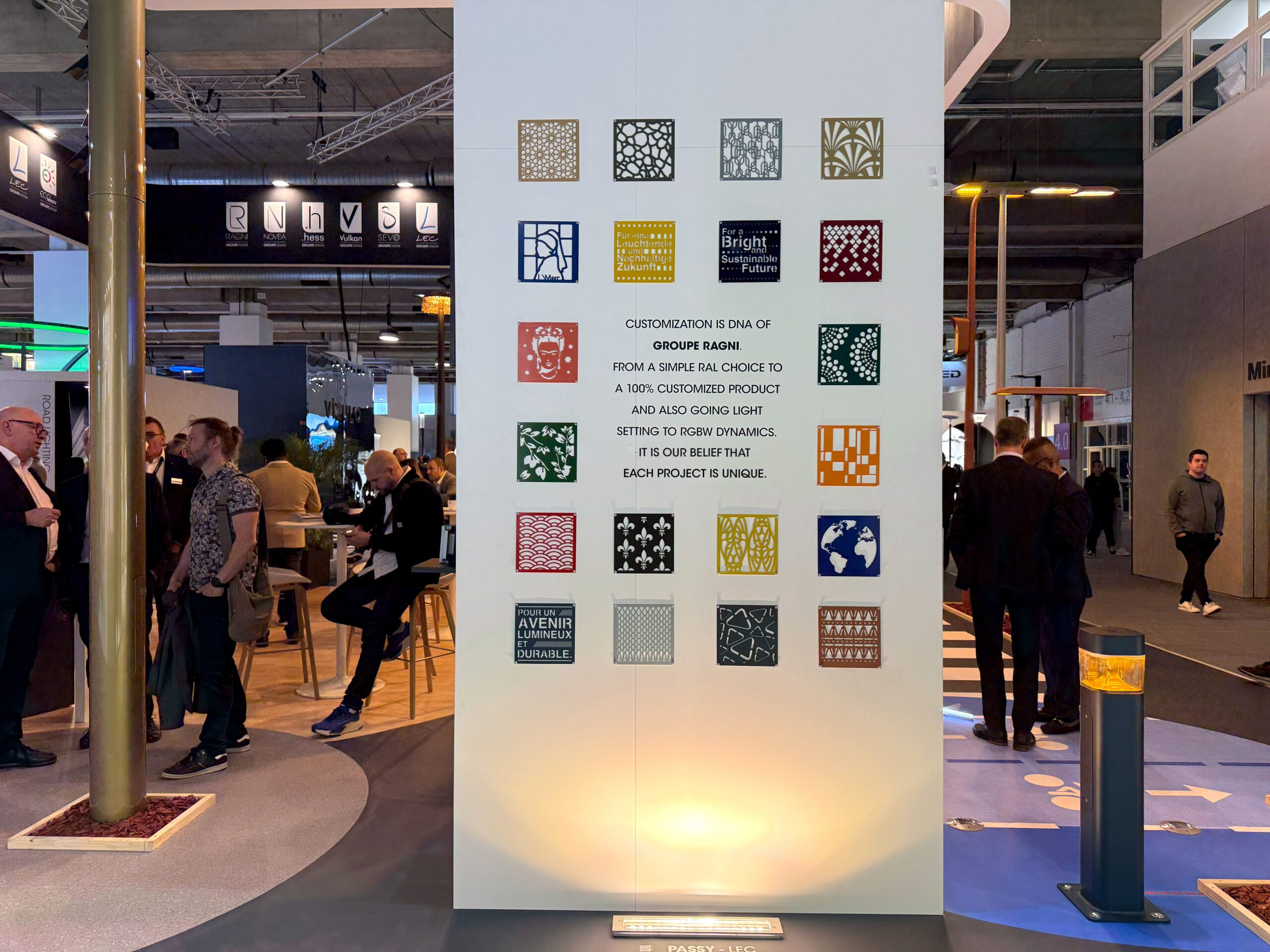
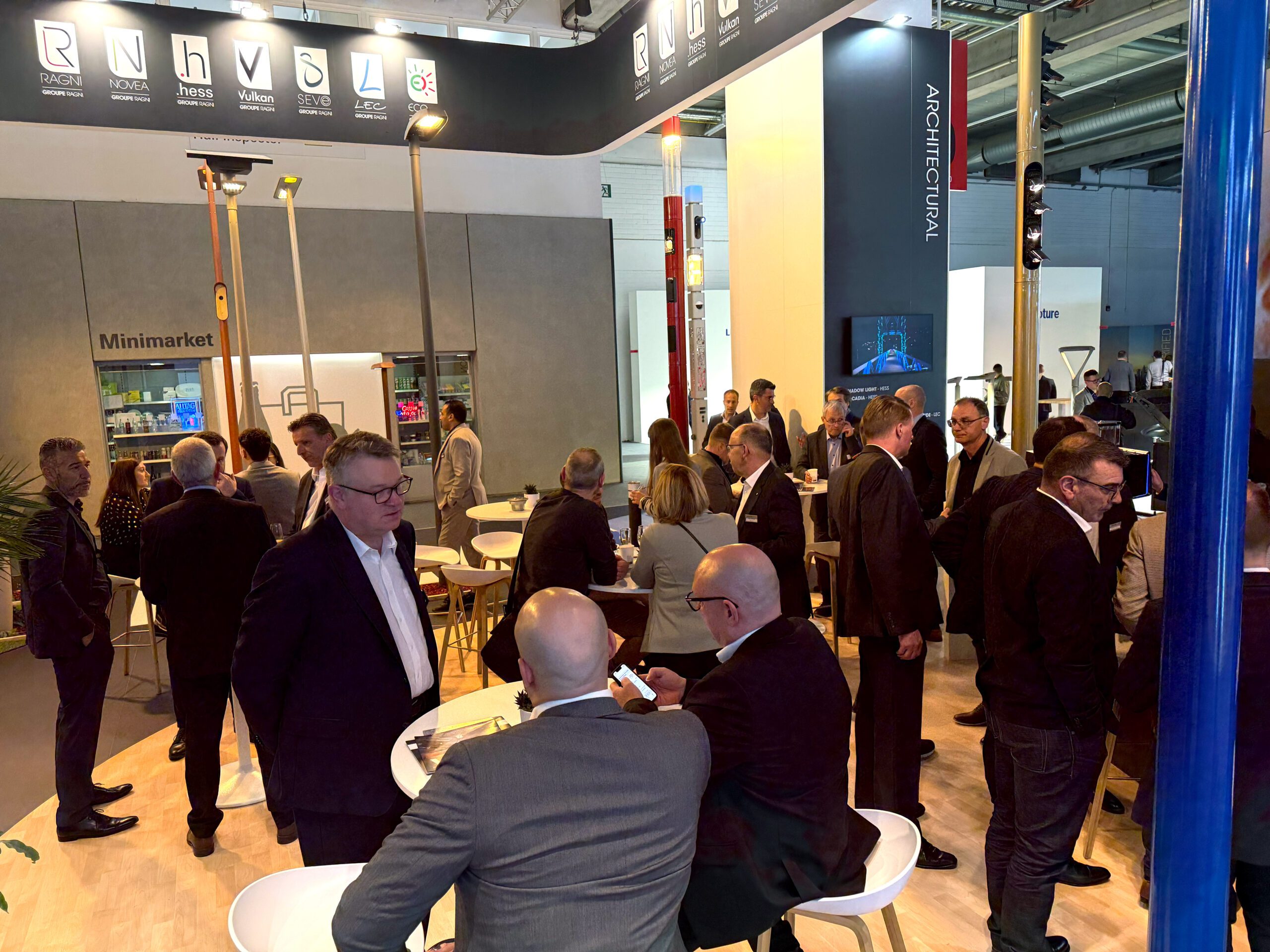
GROUPE RAGNI had the honor and pleasure of participating in the 2026 edition of Light+Building, an international trade fair dedicated to innovative technologies for public lighting and building lighting.
For this edition, the Group has created a unique booth showcasing the lighting applications that all of the Group’s brands can address thanks to their respective expertise:
- Urban lighting
- Mobility & transport
- Architectural lighting
- Park & garden
- Road lighting
- Connected lighting / smart city
- Residential lighting
The many visitors were thus able to wander from one area to another and discover the brands’ products—some of which are already iconic—as well as their innovative new offerings.
Among the new products:
- FINE – A range of RAGNI lighting fixtures featuring a sleek and elegant design
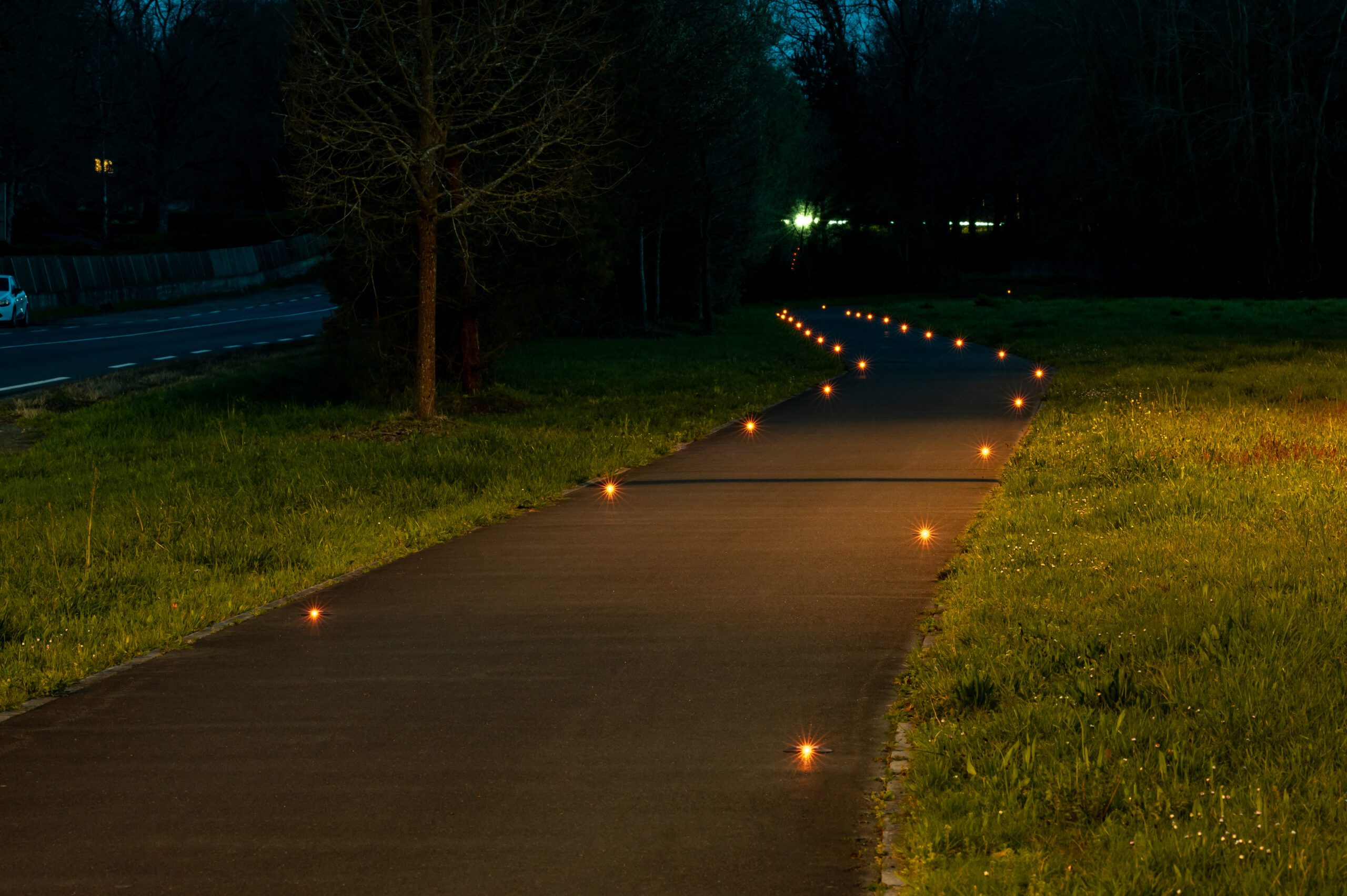
- LEXA® – An innovative ground-mounted lighting system designed by LEC to provide safety, guidance, and alerts
- TANDEM – A compact, discreet, and elegant wall sconce with dual adjustable light sources
- RENO Solar – A HESS bollard equipped with a solar panel to improve energy efficiency
- ECO SOL – A solar-powered reed with the aesthetic appeal of a flower, designed by ECO-INNOV to decorate parks, gardens, and plazas
- AKO – the latest addition to the NOVÉA ÉNERGIES lighting range, specially designed to complement the modern, sleek design of the AKKOR column
Ivory Coast: Light for excellence and education
Melyn Dreysse
LOCATION
Sinématiali, Ivory Coast
Luminaires
In Sinématiali, Ivory Coast, GROUPE RAGNI puts its expertise at the service of excellence and the future of young people.
The capital of the department in the Poro region (Savanes district), the town embodies the dynamism of a progressing Africa, driven by the growing power of knowledge and innovation.
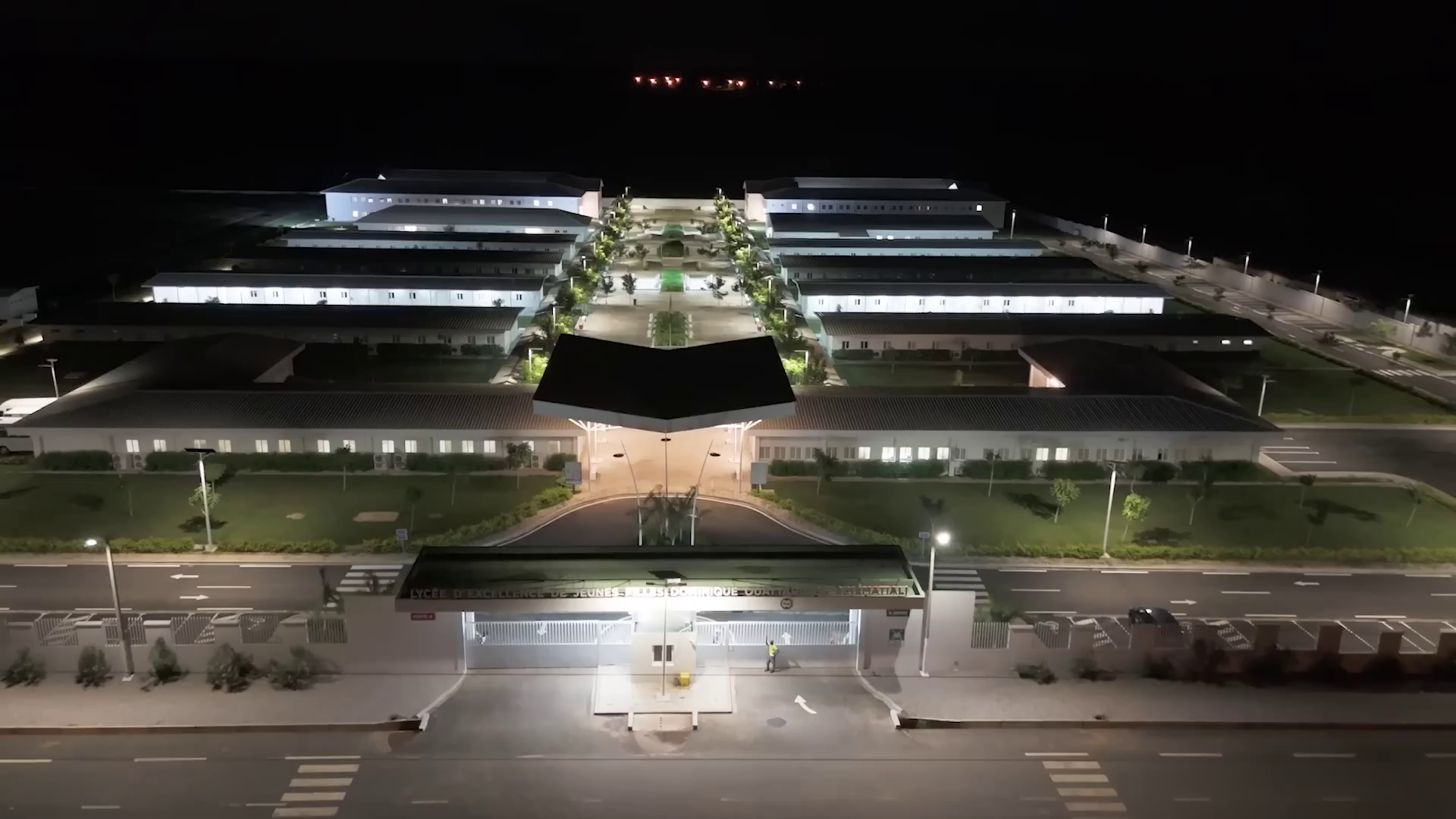
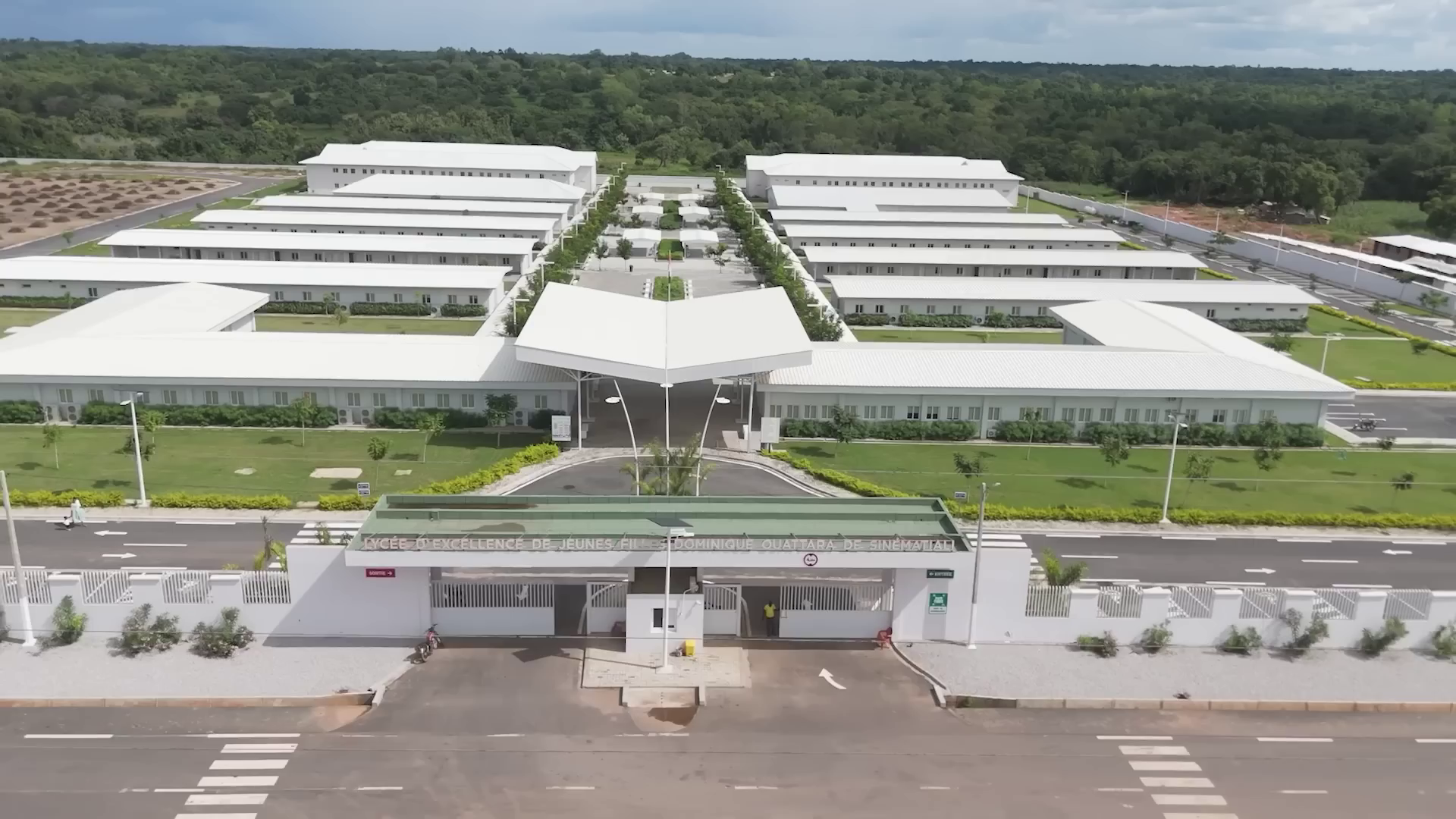
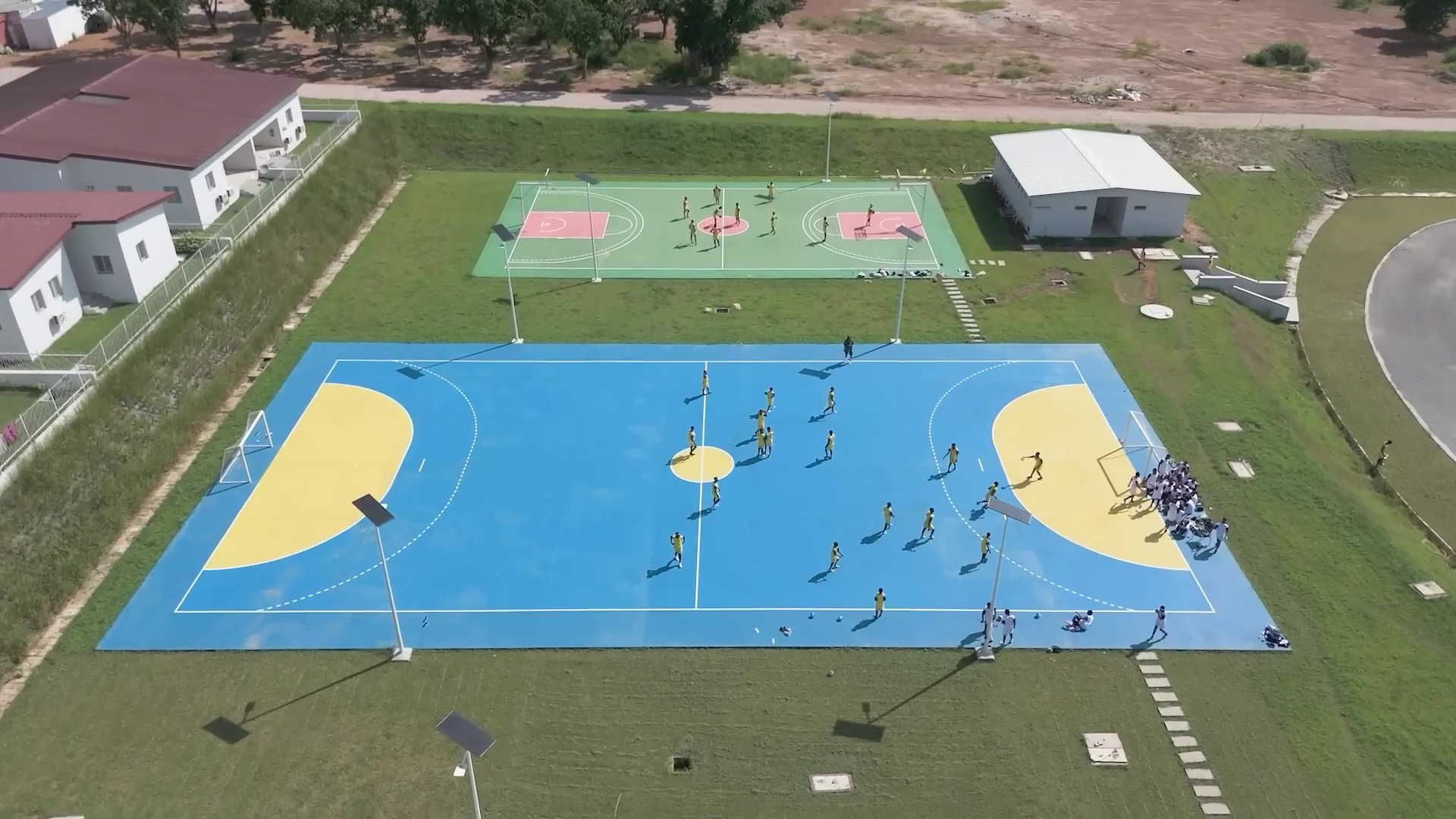
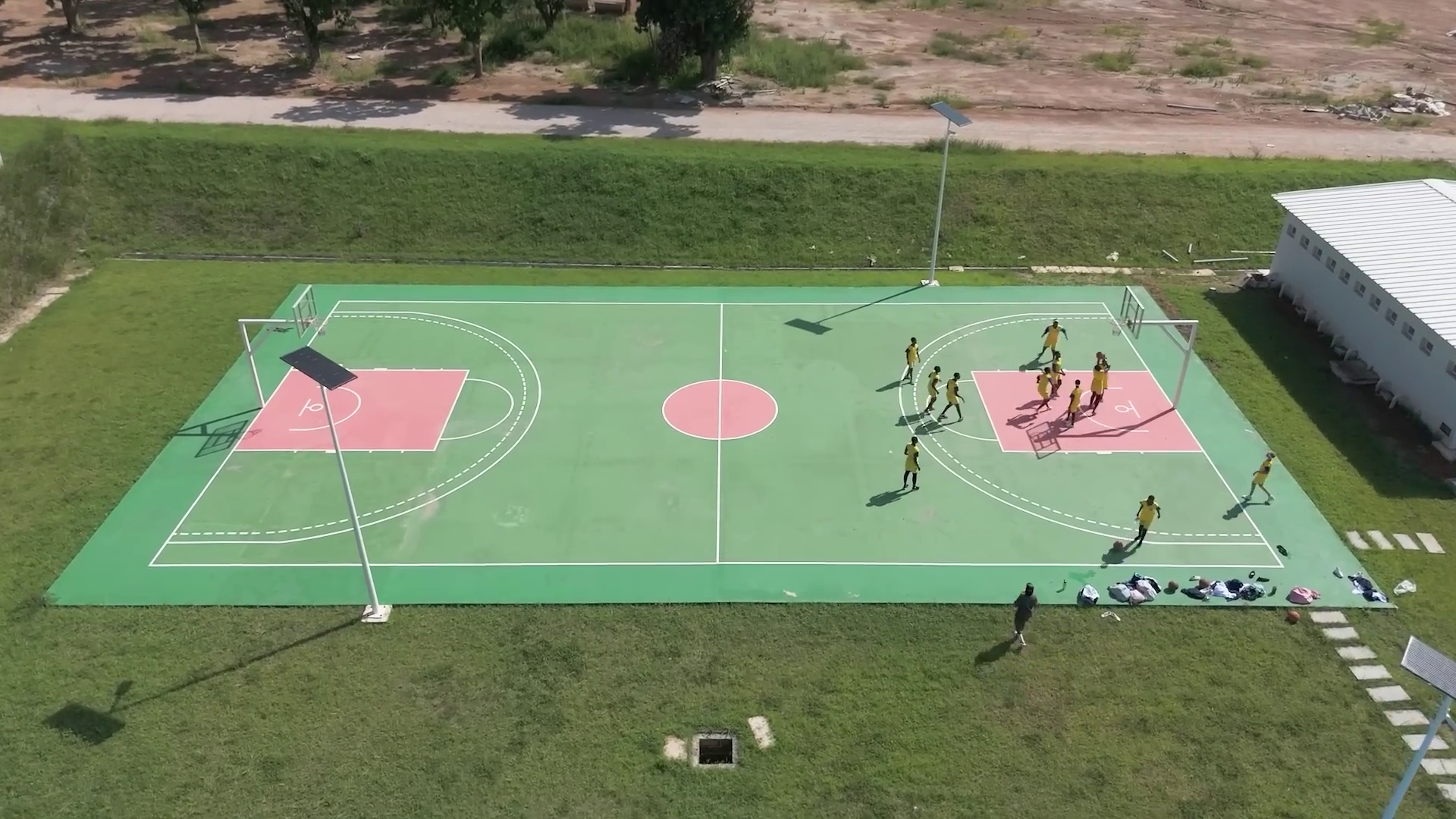
It was here that inaugurated in May 2025, the Lycée d’Excellence de jeunes filles, a powerful symbol of academic success and equal opportunity.
Named after the First Lady of Ivory Coast, Madame Dominique Ouattara, the school aims to provide a demanding, secure learning environment that will help the country’s future talent to flourish.
To support this ambition, exterior lighting is a strategic component: it ensures the safety of students, facilitates movement within the campus and enhances the quality of daily life. With this in mind, the main contractor Contractor CI called on GROUPE RAGNI, renowned for its expertise and the reliability of its lighting solutions.
Long-lasting, reliable solar lighting
To ensure the long-term safety of this girls’ boarding school, the solar solution was a natural choice.
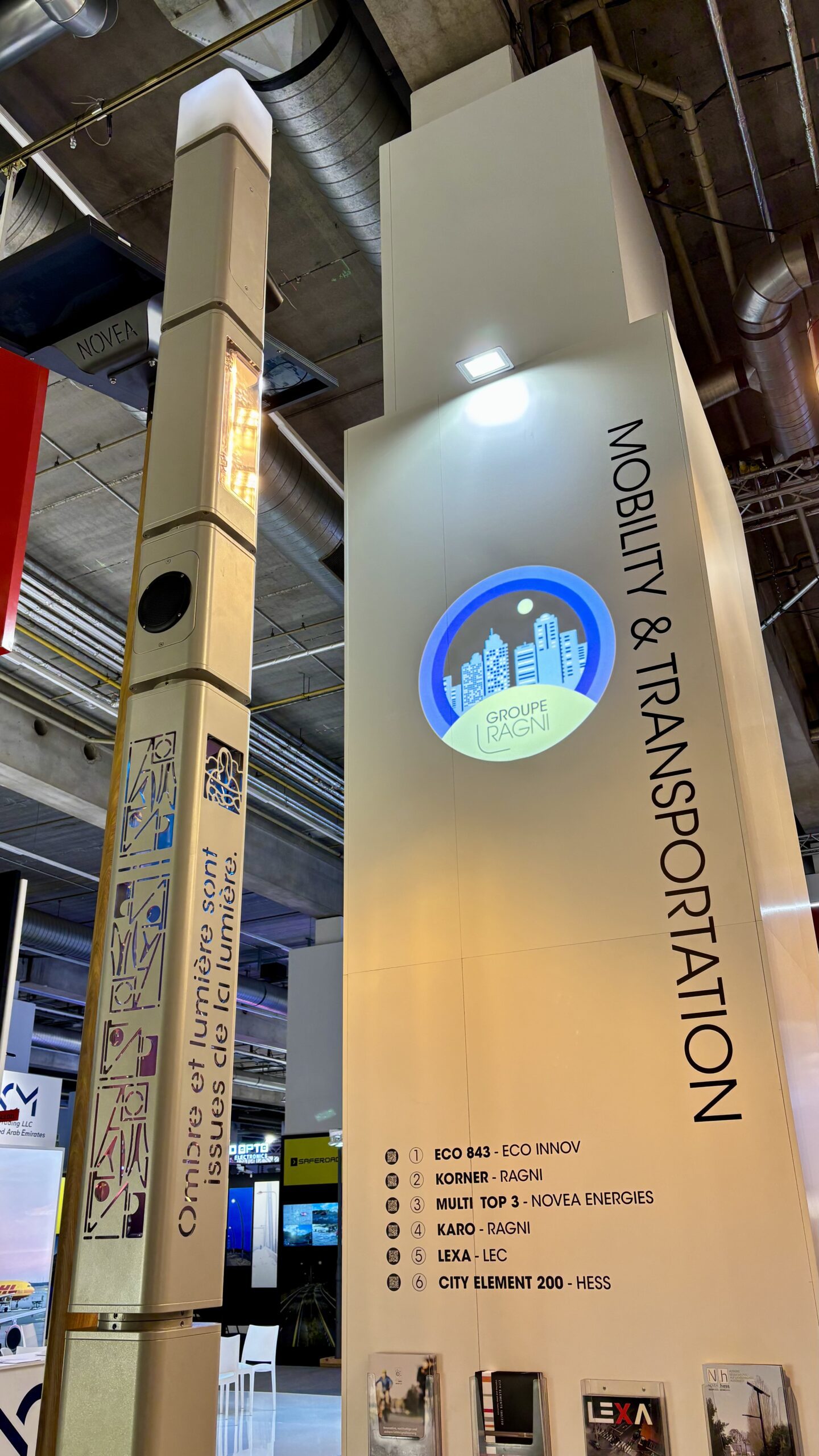
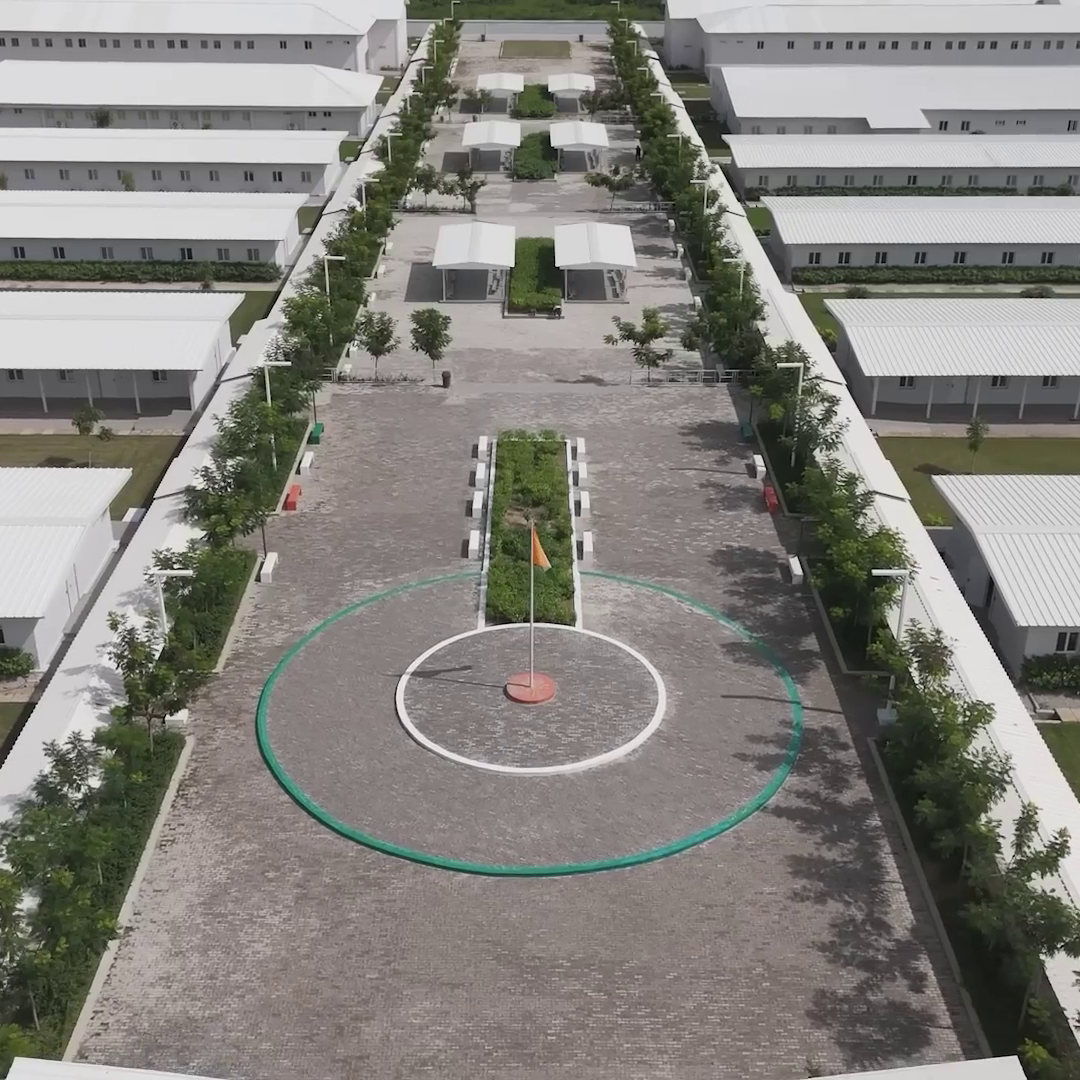
The installer deployed 29 COMBI TOP 3 and 5 COMBI TOP 5 double-lamp solar streetlights with dimming supplied by our brand NOVÉA ENERGIES to provide efficient, mindful lighting for roads, parking lots and sports fields.
Additional information:
- 24 ALTURAN luminaires now illuminate the central aisle,
- 25 KASSIO bollards and 3 MARGO bollards from our RAGNI brand structure the pedestrian zones and the campus traffic circle.
Proud to have contributed to this emblematic project, GROUPE RAGNI underlines the quality of the collaboration with local players, all committed to the same values: excellence, sustainability and positive societal impact.
Thanks to this development, the Lycée d’Excellence de Sinématiali now has a modern, safe and forward-looking environment – a source of hope for an entire generation and, more broadly, for the development of the country and the continent.
We would like to thank Ministry of National Education and Literacy and its Minister Professor Mariatou Kone, Ageroute, General Manager Fabrice Coulibaly and his supervisory Minister Dr Amédé Koffi Kouakou, BNETD and its CEO Kinapara Coulibaly, Ci-Énergies, the Government of Ivory Coast Madame Dominique Ouattara, First Lady of Côte d’Ivoire, Ministry of Mines, Oil and Energy, the actions of Minister Fidele Gboroton Sarasoro, Contractor CI, not forgetting our Ivorian subsidiary: Tertuce Lingani, Sales Engineer and Fatoumata Menann-Kouame, General Manager at GROUPE RAGNI Côte d’Ivoire.
2025 events - Where can you find GROUPE RAGNI?
Melyn Dreysse

September 10 – 12
Nantes, France
Stand n°4

September 17 – 18
Paris, France
Stand n°7

September 29 – 30
Paris, France
Stand B9

November 13 – 14
Warsaw, Poland

November 19 – 20
London, United Kingdom

December 2 – 4
Lyon, France
Stand n°5E 40

8 – 13 March 2026
Frankfurt, Germany
Hall 4 – Stand D20
Chaumont-en-Vexin lights up its future with an exemplary renovation of its public lighting
Melyn Dreysse
Nestled in the Oise department, the town of Chaumont-en-Vexin (Hauts-de-France), classified as a Petite Cité de Caractère® (Small Town of Character), charms visitors with its historical heritage—cobblestone streets, stone walls, and a listed church—and its unspoiled natural environment.
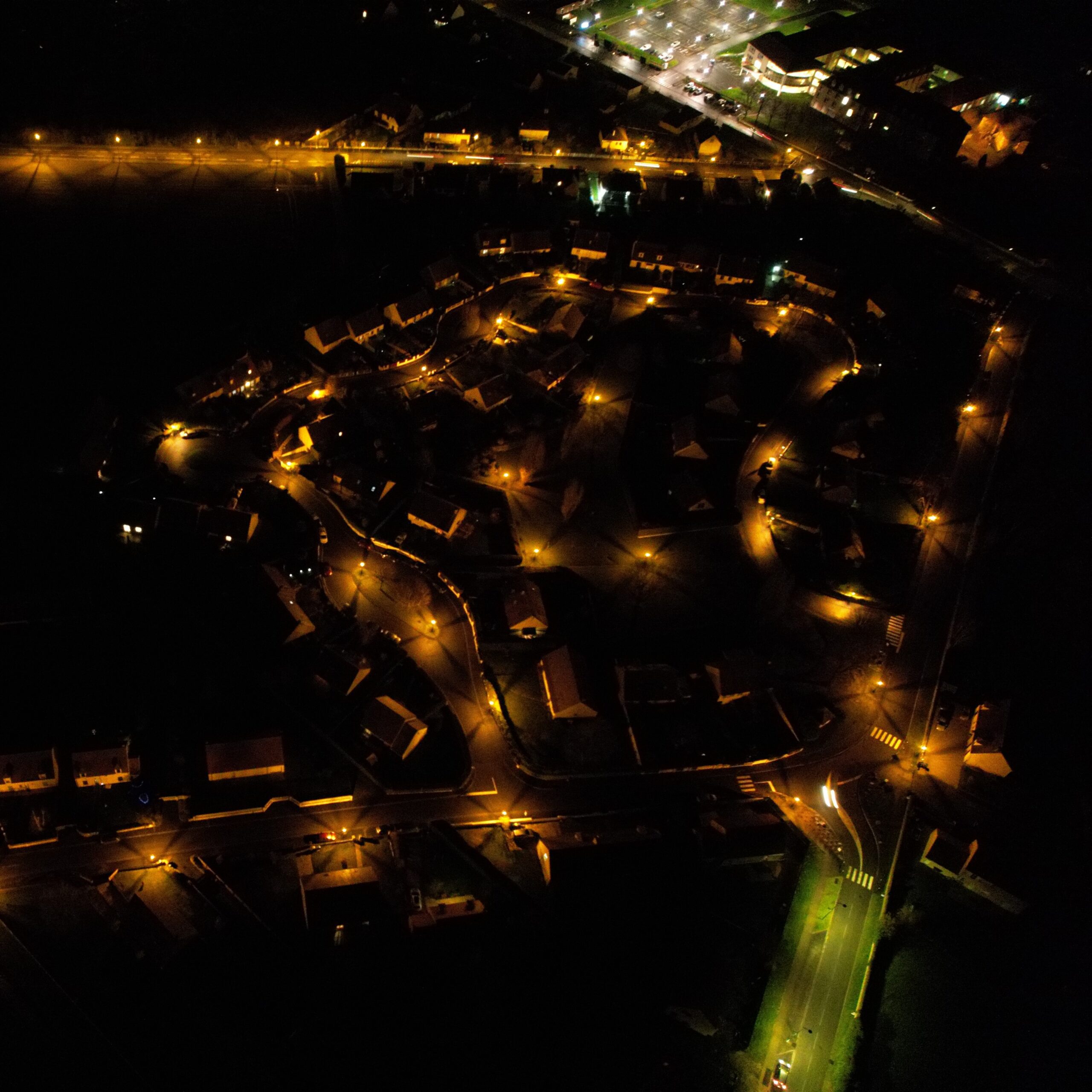
Between 2024 and 2025, it renovated 70% of its public lighting, replacing more than 600 light points one by one, in collaboration with the company RAGNI.
Faced with rising energy costs, the municipality, supported by SE 60, has accelerated its transition to LED lighting, aiming to achieve savings, a uniform lighting system, enhanced heritage and reduced light pollution.
The color temperatures were carefully selected: 2700 K for the main lanes and 2200 K for pedestrian areas.
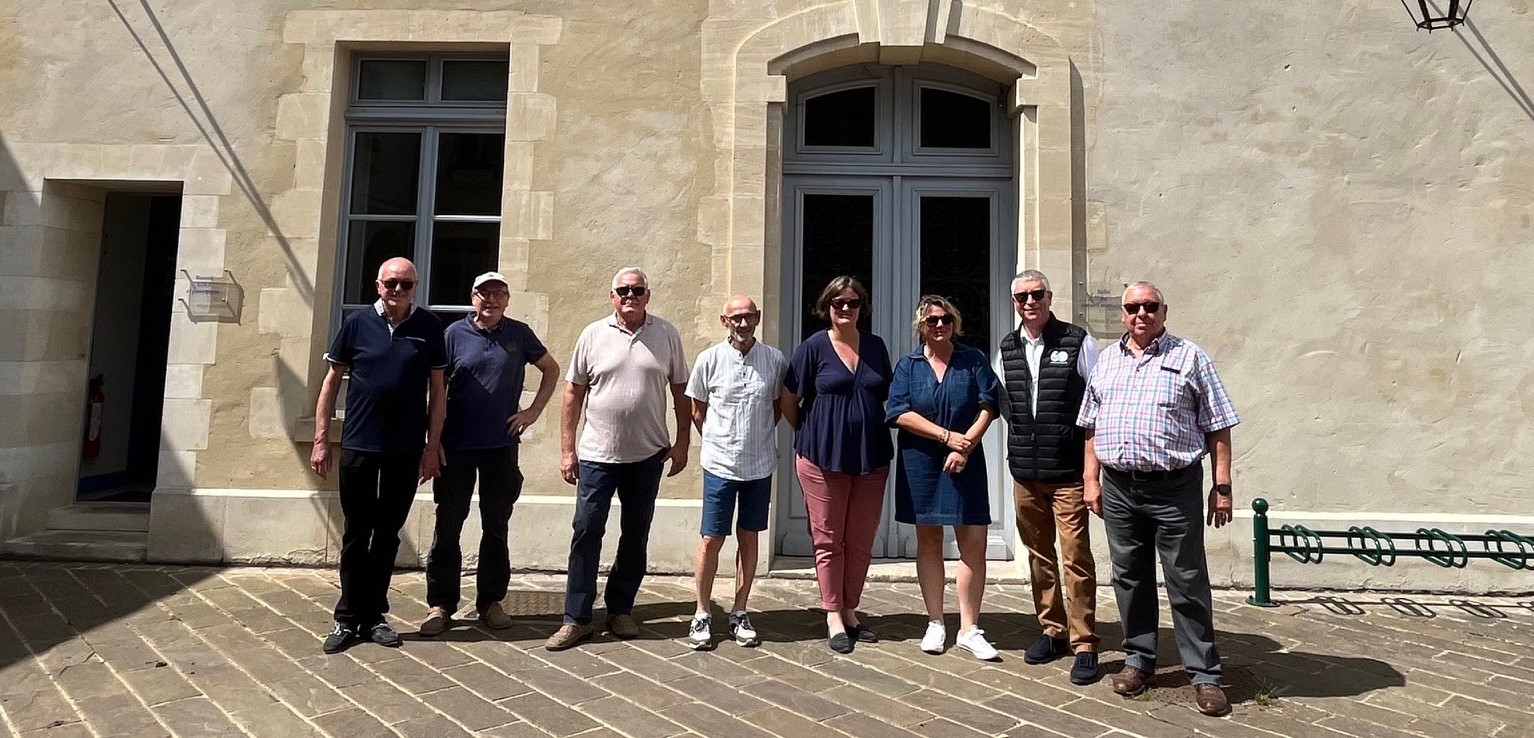
Mayor Emmanuelle LAMARQUE explains: “Our choices were guided by the preservation of biodiversity, the comfort of residents, and, ultimately, aesthetics, which we fully appreciated when we saw how much warmer lighting makes a place more welcoming. “.
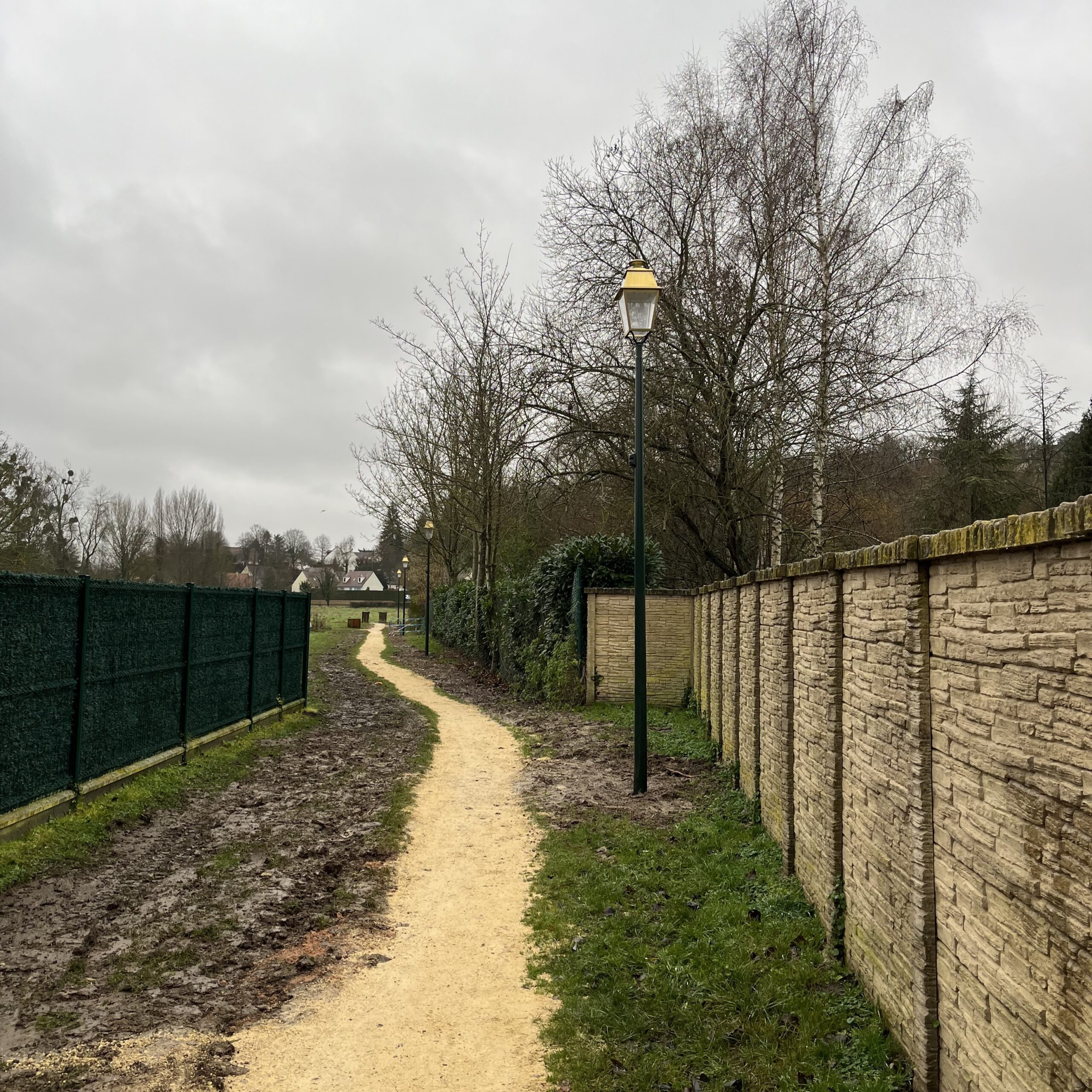
“We took inspiration from neighboring cities. to adapt our lighting, distinguishing between the city center and residential areas with the support of SE 60 and RAGNI, who developed an optimized lighting plan with color temperatures adapted to each location. ” adds Mr. DUVIVIER, Deputy Mayor for Public Works, Safety, and Urban Planning
The nighttime blackout, formerly scheduled from midnight to 5 a.m., has been replaced by lighting reduced to 20%, which is considered more comfortable and respectful of wildlife. Presence detectors have been installed in certain sensitive areas (parking lot, school route).
Among the more than 600 light points replaced, 236 RETROFIT ÉLÉGANCE kits modernized existing lanterns while preserving street furniture and reducing the carbon footprint. Custom retrofits were designed for six heritage lanterns. Two brass VENCE lanterns incorporate birdhouses to encourage local wildlife, an initiative by SE 60 and RAGNI that has been praised by elected officials.
“The idea of integrated nesting boxes is excellent and has been very well received. Their discreet presence blends in perfectly with the environment, and we are very satisfied with them,” says the Mayor.
Entirely financed locally without government assistance, the project is part of a broader ecological transition strategy.
In 2026, the municipality plans to implement new sustainable developments, including a greenway and a redevelopment of the church square.
“Several projects are planned for 2026: creation of a pedestrian and cycle path with pedestrian detection, burial of the remaining overhead networks with installation of harmonized street lighting, and redevelopment of the church square with disabled access and responsible lighting in line with current choices,” says Mr. Jean DUVIVIER.
Feedback from residents has been positive, and the absence of criticism on social media is seen as a sign of success. The Mayor concludes: “We are completely satisfied: residents are generally welcoming of the project, especially because of the peace of mind that controlled lighting brings. Elected officials support it, and the absence of negative feedback is a good indicator of success.“.
We would like to extend our warmest thanks to Mayor Emmanuelle LAMARQUE and Mr. Jean DUVIVIER for taking the time to participate in this interview. We would also like to express our gratitude to SE 60 for its invaluable support in making this project a success, as well as to Romain KOZAR, sales representative at ETUDEQUIPE, whose involvement was instrumental in bringing this renovation to fruition.